CLICK HERE FOR THEIR CHANNEL
Click Here or Graphic Above for Video
A
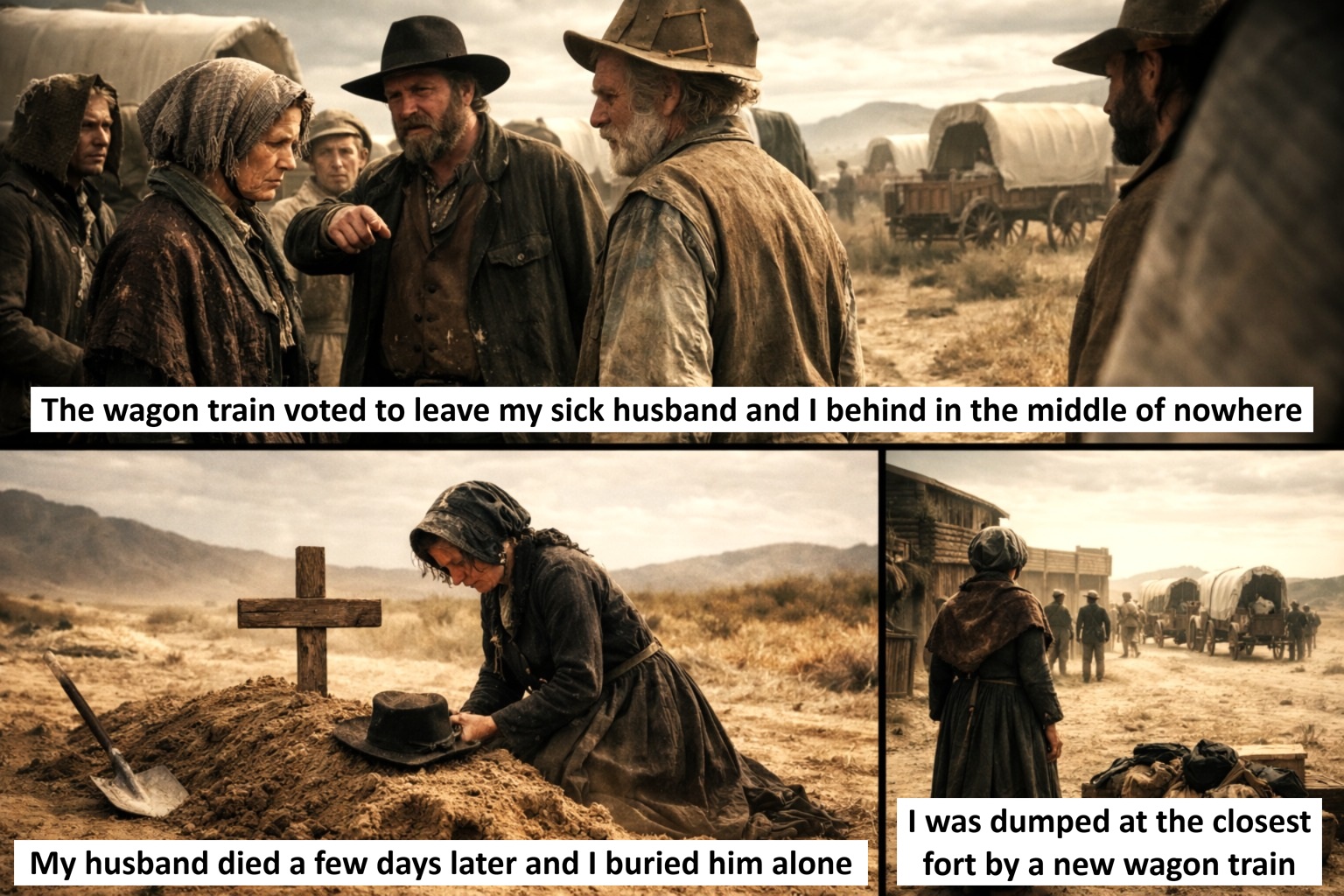
Pioneer women talks about how she and her husband were
Abandoned in the middle of nowhere by a wagon train.
Wagon train
expulsion
Life on the overland trails often depended on cooperation, discipline, and hard decisions made by vote. Wagon companies functioned like moving communities, and when fear, scarcity, or conflict rose, individuals or families could find themselves judged a burden or a threat to the survival of the whole. Removal from a train meant losing protection, shared labor, and the relative safety of numbers in a vast and uncertain landscape.
Accounts of expulsion describe shock, humiliation, and disbelief, followed by the immediate reality of isolation. Some turned back, some tried to follow at a distance, and others attempted to continue alone. Whether the decision was justified or tragic, the emotional cost could last far longer than the miles that followed.
Click Here or Graphic Above for Video
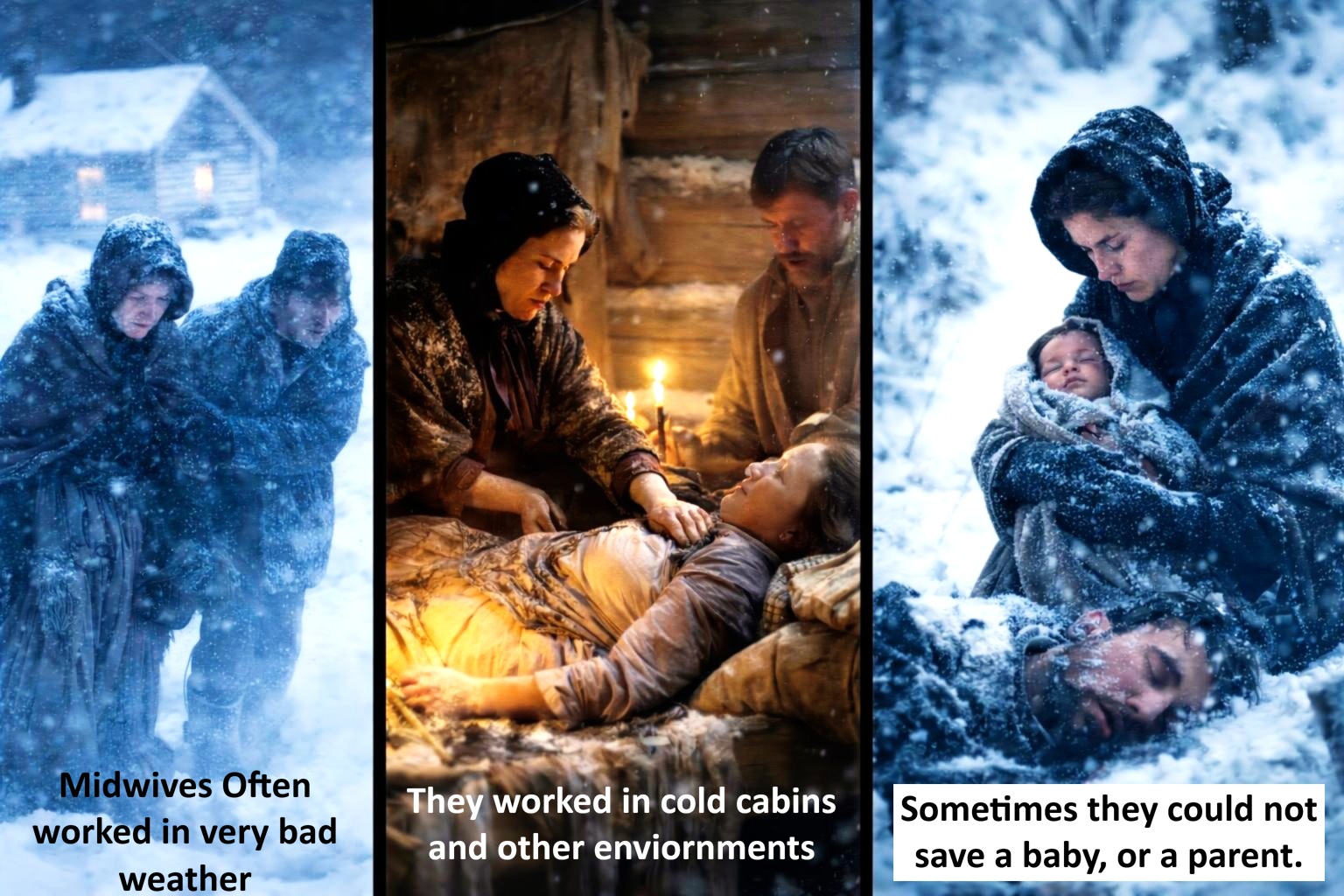
A Midwife walks through a Blizzard Storm 2 miles to deliver a breach baby. After the successful delivery
the storm causes the death of the mother the father and the baby and the father.
Midwives on the frontier
In many frontier settlements, trained doctors might be days away, if they could be reached at all. Midwives carried knowledge passed down through families and communities, and they traveled in every season and condition because childbirth would not wait for better weather. Their work demanded endurance, practical skill, and the willingness to face life-and-death moments inside small cabins far from help.
The burden did not end with delivery. A midwife might remain for days, watching for fever, bleeding, or weakness in mother and child, often while her own family waited at home. Gratitude could be deep, but so could regret, especially when choices made under pressure led to outcomes no one could undo. Their lives were woven with responsibility, fatigue, and memories that followed them long after the storm had passed.
Click Here or Graphic Above for Video
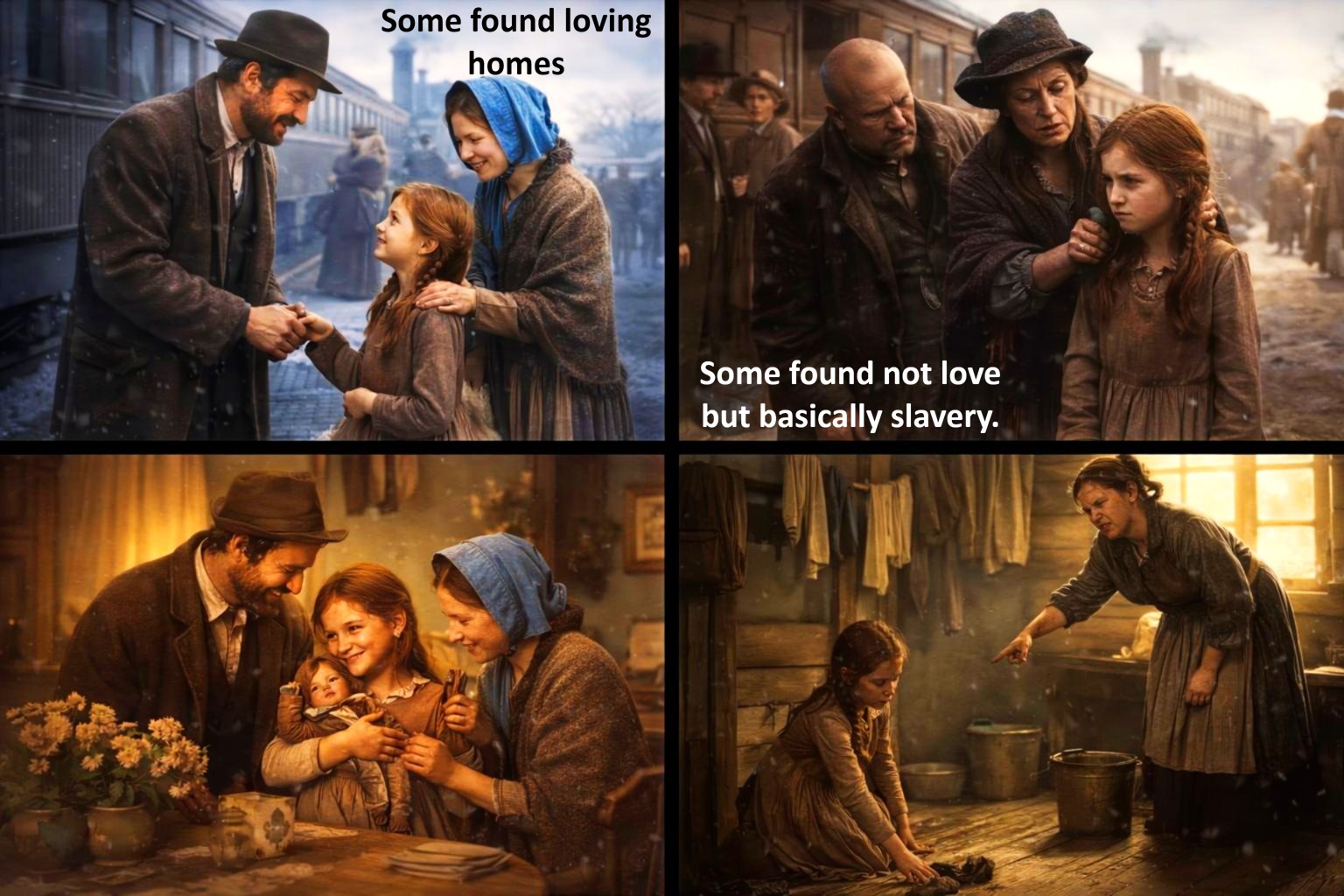
There was a time when orphans from New York City and other big cities were put on an "Orphan Train" that traveled
across county to the western USA to find new homes for the orphans.
The Orphan Train Movement
The Orphan Train Movement was a child-relocation program that operated in the United States from the 1850s into the early twentieth century. Organized primarily by charitable groups in large eastern cities, most notably the Children’s Aid Society of New York, it aimed to move homeless, abandoned, or impoverished children from crowded urban environments to new homes in rural communities across the Midwest and West.
Children traveled by rail in groups and were presented at scheduled stops, where local families gathered to meet them and offer placements. Some youngsters were welcomed as sons and daughters and became deeply rooted members of their new families. Others, however, experienced loneliness, harsh labor, neglect, or abuse, with limited ability to change their circumstances. The outcomes varied widely, and together they form a complicated legacy of hope, opportunity, loss, and hardship that still echoes in American memory.
Click Here or Picture Above for Video
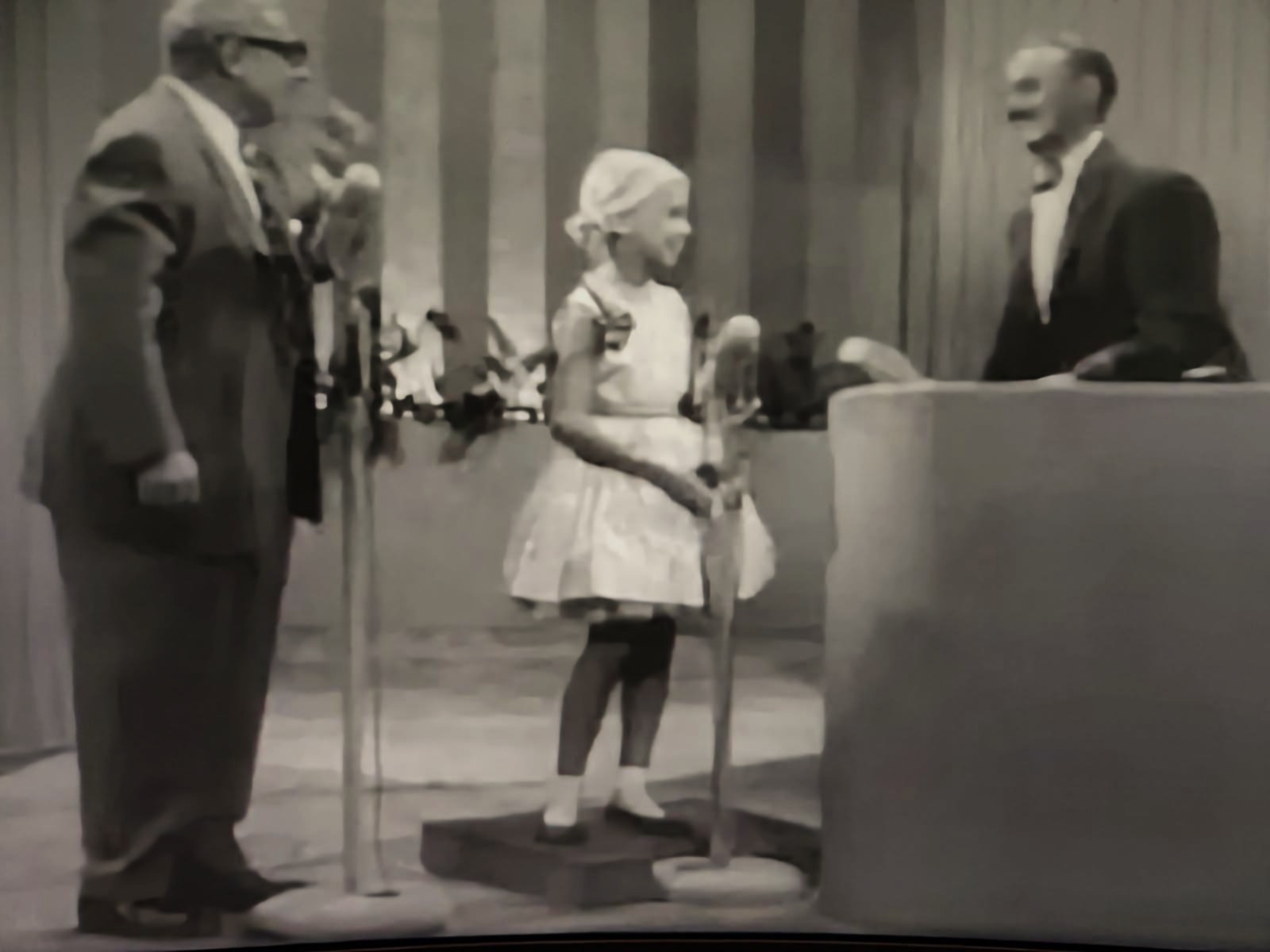
Best of Groucho Marx
(1959)
Young popular
Actress Evelyn Rudie is featured on this classic
quiz show in the second half of the show. Groucho
Marx and his two brothers gained fame in the
1930's and 1940's in many comedy movies. His humor
carries through to his 1950's quiz shows.
Spontaneous Humor is what made this show very
popular and loved. His shows fit the theme of this
page, "Anything Can Happen" and does. Hold
on, the humor comes quick and fast in the second
half of the show.
2nd Video - Groucho disturbed by crazy eyed guest (1955) Click Here