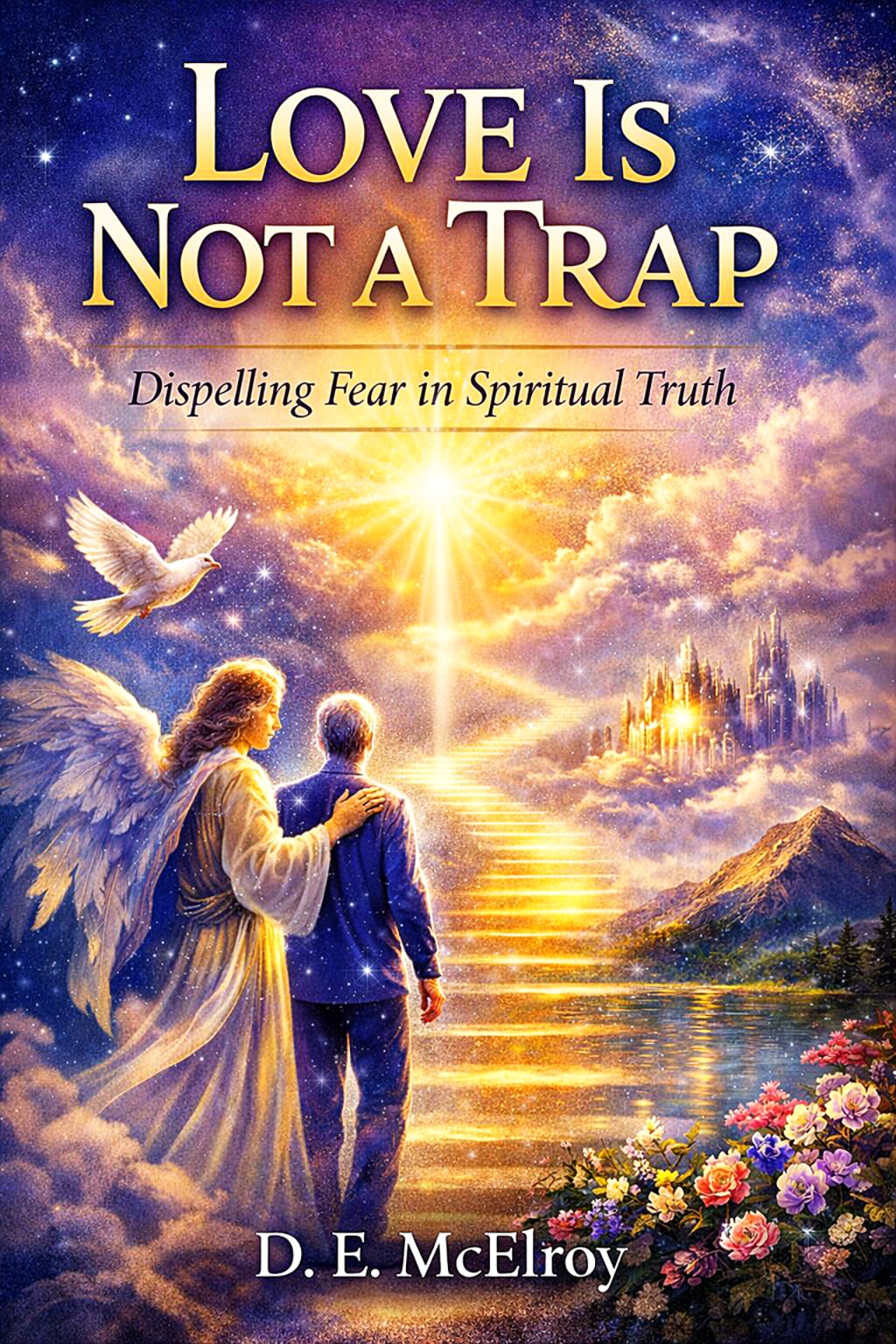
Table of Contents
Introduction
In every age, sincere seekers have tried to understand why we are here, what happens when we die, and what—if anything—waits beyond this life. These questions are not signs of weakness or confusion. They are signs of awareness.
In recent years, a new wave of spiritual content has appeared online, often using ancient terms such as Gnosticism, Archons, the Demiurge, reincarnation traps, and hidden teachings of Jesus. Many of these presentations claim to reveal a suppressed truth. They suggest that the universe is structured to deceive us, that love itself may be a mechanism of control, and that even our reunions with loved ones after death could be part of an elaborate cosmic trap.
At first glance, this material can feel profound—especially to those who have already seen through the shortcomings of institutional religion. But upon closer examination, something feels familiar. The language has changed, yet the structure remains the same: fear, suspicion, hidden enemies, and the idea that salvation depends on avoiding punishment.
This book was written to pause that momentum.
Not to dismiss ancient wisdom.
Not to attack sincere seekers.
But to ask a simple, grounding question:
Does this align with lived experience—or does it recreate the very fear it claims to escape?
For decades, Near-Death Experiences have offered something rare in spiritual inquiry: consistent, cross-cultural, first-person testimony. People of all beliefs—and no beliefs—report remarkably similar experiences of consciousness beyond the body. These accounts are not mediated by institutions, doctrines, or ancient power structures. They are lived, remembered, and shared.
And what do they consistently reveal?
Love.
Clarity.
Choice.
Understanding.
And an absence of manipulation.
This book explores where ancient symbolic teachings illuminate truth—and where modern fear-based interpretations quietly rebuild the same religious prison many were trying to leave behind.
If there is one message woven through Near-Death Experiences, compassionate spirituality, and the most authentic teachings attributed to Jesus, it is this:
Love is not a trap.
Chapter 1 — When Liberation Becomes Another Religion
Many people turn to alternative spiritual frameworks after becoming disillusioned with organized religion. This is understandable. Traditional religion often relies on authority, obedience, guilt, and fear of punishment. When those structures no longer resonate, seekers look elsewhere.
Gnosticism, at its best, offered a radical alternative. It emphasized direct knowing rather than blind belief. It challenged external authority and encouraged individuals to seek truth within their own consciousness. In this sense, it was liberating.
However, not all that travels under the name “Gnosticism” today remains true to that spirit.
A troubling pattern has emerged in modern interpretations: the recreation of religious control structures using different language. Instead of God and Satan, we are given the Monad and the Demiurge. Instead of hell, we are warned of reincarnation traps. Instead of sin, we are told we are ensnared by ignorance contracts. And instead of salvation through obedience, we are instructed to remain suspicious—even of love itself.
This is not liberation. It is substitution.
Any worldview that requires constant vigilance against deception, hidden enemies, and false compassion eventually produces the same psychological outcome as dogmatic religion: fear.
Fear narrows awareness.
Fear undermines trust.
Fear fractures the soul’s natural orientation toward
connection.
Near-Death Experiences provide a powerful corrective to this pattern. Across cultures and belief systems, individuals report entering a state of consciousness marked by profound clarity and unconditional acceptance. There is no evidence of coercion. There is no demand to submit. There is no threat of punishment for choosing incorrectly.
Life reviews, when they occur, are not judgments imposed from outside. They are experiences of understanding—often described as compassionate, educational, and deeply healing. Individuals are not forced to reincarnate. They are not shamed. They are not manipulated by guilt.
Most importantly, love is never portrayed as a mechanism of control.
This matters because fear-based spirituality does something subtle and dangerous: it trains people to distrust their own deepest experiences of connection. It teaches suspicion where discernment is needed, and paranoia where wisdom should grow.
True awakening does not require rejecting
love.
True freedom does not demand fear.
And truth does not need threats to sustain itself.
When liberation becomes another religion, the soul knows. Something feels heavy again. Guarded. Anxious. The promised freedom begins to resemble the prison it was meant to replace.
The question is not whether ancient symbols
contain insight—they often do.
The question is how those symbols are interpreted.
And whether the interpretation leads us toward greater compassion and clarity, or back into fear wearing a different mask.
Chapter 2 — The Monad and Source Consciousness
Among the many terms circulating in modern spiritual discussions, few are as misunderstood as the word Monad. It is often presented as an abstract concept, a distant cosmic principle, or even as a rival to the God of traditional religion. In truth, the Monad is best understood not as a being, but as ultimate reality itself.
In classical Gnostic thought, the Monad represents the origin of all existence—infinite, indivisible, and beyond description. It is not male or female, not personal in the human sense, and not bound by time or form. The Monad does not rule, judge, or command. It simply is.
This description may sound unfamiliar to those raised in institutional religion, yet it aligns remarkably well with what thousands of Near-Death Experiencers describe when they encounter what they often call Source, the Light, or God.
Across cultures, belief systems, and historical periods, people who undergo Near-Death Experiences consistently report encountering a presence that is:
- Vast beyond comprehension
- Intelligent beyond imagination
- Loving beyond emotion
- Non-judgmental and non-coercive
Importantly, this presence is rarely experienced as a separate ruler standing apart from the soul. Instead, it is often described as the very ground of consciousness itself, a reality in which the individual both remains distinct and yet profoundly connected.
This is where Gnostic language and lived experience genuinely converge.
The Monad was never meant to be feared. It was never presented as distant, punitive, or manipulative. In authentic Gnostic texts, the Monad is the source of light, awareness, and spiritual fullness—what some writings call Pleroma, the fullness of divine reality.
Near-Death Experiences echo this theme repeatedly. Individuals describe entering a realm of overwhelming familiarity, as if returning home rather than arriving somewhere new. There is recognition without words, understanding without explanation, and belonging without condition.
This matters because modern fear-based narratives often distort the Monad into something abstract and inaccessible, while simultaneously portraying the universe as hostile or deceptive. That portrayal is not supported by either ancient sources or contemporary testimony.
The Monad does not need intermediaries.
It does not operate through threats.
It does not require contracts, bargains, or suspicion.
In many Near-Death accounts, individuals report realizing that they were never truly separate from Source, even while living physical lives. The separation was experiential, not ontological. In other words, the soul did not need to escape or defeat anything—it simply needed to remember.
This idea of remembrance is central to authentic Gnostic thought. Gnosis does not mean acquiring secret information. It means direct knowing—an inner recognition of truth that arises naturally when fear and illusion dissolve.
Seen this way, the Monad is not a cosmic authority figure. It is the intelligence of love itself, the field from which consciousness arises and to which it naturally returns. Nothing needs to be resisted to reach it. Nothing needs to be rejected. And nothing needs to be feared.
When Near-Death Experiencers speak of merging with the Light, they do not describe annihilation or loss of self. They describe expansion—becoming more themselves, not less. Individual identity remains meaningful, yet no longer isolated. This mirrors Gnostic descriptions of the soul awakening to its divine origin while retaining awareness.
Where confusion enters is when symbolic language is mistaken for literal cosmology.
Ancient writers used myth, metaphor, and story to express realities that cannot be captured by simple language. When those symbols are stripped of context and treated as mechanical descriptions of the afterlife, fear quickly fills the gap left by misunderstanding.
The Monad was never a distant god behind a
hostile universe.
It was never hidden behind traps or tests.
And it was never opposed to love.
If anything, both Near-Death Experiences and the most authentic Gnostic insights point toward the same conclusion:
Reality is fundamentally intelligent, relational, and compassionate.
Understanding this does not require rejecting ancient wisdom or modern testimony. It requires holding both with humility—and refusing interpretations that turn love into suspicion.
At the foundation of this book is a simple truth:
The Monad, like Source, is home.
Chapter 3 — Jesus the Revealer, Not the Ruler
Few figures in human history have been more shaped—and reshaped—by institutions, movements, and agendas than Jesus. Over centuries, his message has been filtered through political power, theological systems, and cultural fear, often resulting in a portrayal that feels far removed from the spirit of his original teachings.
To understand Jesus clearly, it is essential to separate three layers:
- The institutional portrayal
- The symbolic Gnostic portrayal
- The experiential portrayal revealed through Near-Death Experiences
When these layers are examined carefully, a consistent picture begins to emerge—one that does not support fear-based spirituality.
The Institutional Jesus
In much of organized Christianity, Jesus is presented primarily as a ruler figure:
- The sole gatekeeper to salvation
- A judge associated with eternal consequences
- The divine authority demanding belief and obedience
This portrayal developed alongside institutional power structures, particularly as Christianity became aligned with empire and governance. Over time, fear-based elements—hell, punishment, guilt, and exclusion—became tools of control rather than pathways to awakening.
Yet even within the canonical Gospels, traces of a very different message remain. Jesus repeatedly speaks of:
- The Kingdom of God within
- Inner transformation rather than external conformity
- Love as the fulfillment of spiritual law
These teachings do not align with a system of fear, surveillance, or cosmic enforcement.
Jesus in the Gnostic Texts
The Nag Hammadi writings present Jesus not as a ruler demanding allegiance, but as a revealer of understanding. In texts such as the Gospel of Thomas and the Gospel of Philip, Jesus speaks in paradox, metaphor, and invitation rather than command.
He does not threaten punishment.
He does not describe cosmic enemies waiting to ambush
souls.
He does not instruct followers to fear the afterlife.
Instead, he emphasizes awakening—seeing clearly through illusion and returning to a deeper awareness of truth already present within the soul.
The Modern Distortion
Some contemporary interpretations claim that Jesus revealed a hostile universe filled with Archons, traps, and deceptive forces waiting to ensnare souls after death. According to these narratives, even love must be questioned, life reviews rejected, and reunions with family viewed with suspicion.
This portrayal creates a serious problem: it turns Jesus into a messenger of paranoia rather than liberation.
There is no historical evidence that Jesus taught people to distrust love, compassion, or recognition after death. There is no support for the idea that he warned of false relatives or coercive life reviews. These themes do not appear in early Christian writings, authentic Gnostic texts, or lived spiritual testimony.
Jesus and Near-Death Experiences
When individuals encounter Jesus during Near-Death Experiences, the portrayal is remarkably consistent and strikingly different from fear-based narratives.
He is experienced as:
- Radiantly loving
- Non-judgmental
- Deeply personal without hierarchy
- Free of demands, threats, or tests
Those who encounter him do not report being warned about traps, contracts, or deception. They report feeling understood, accepted, and encouraged toward growth.
If Jesus were a guardian warning humanity of cosmic enslavement through love, that warning would appear clearly and repeatedly in lived experiences. It does not.
Revelation, Not Control
At his core, Jesus functions as a revealer—not of fear, but of truth.
A revealer does not command belief.
A revealer invites understanding.
A revealer does not replace one authority with another.
In both the most authentic Gnostic writings and the deepest Near-Death accounts, Jesus points toward the same realization:
The divine is not distant.
Truth is not hidden behind fear.
And love is not a mechanism of control.
Any teaching that portrays Jesus as warning us to fear love must be questioned—not rejected emotionally, but examined carefully.
Does it expand consciousness?
Does it reduce fear?
Does it align with lived experience?
If the answer is no, then the teaching—however ancient its language—has drifted from its source.
The Jesus revealed through history’s distortions, ancient symbolism, and modern testimony remains consistent in one essential way:
He does not lead through fear.
Chapter 4 — The Demiurge — Symbol, Not Satan
Few concepts have been more misunderstood—or more misused—than the Demiurge. In modern fear-based spiritual narratives, the Demiurge is often portrayed as a malevolent cosmic being, a false god ruling the material world and actively trapping souls. This framing feels dramatic, but it is not faithful to the original intent of the concept, nor is it supported by lived spiritual experience.
To understand the Demiurge clearly, we must begin where the idea originated.
The Origin of the Demiurge
The term Demiurge did not originate with Gnosticism. It first appears in Greek philosophy, particularly in the writings of Plato. In Plato’s work, the Demiurge is not evil. It is a craftsman—an ordering intelligence that shapes preexisting matter according to higher patterns.
The Demiurge was never meant to represent a devil, a tyrant, or a cosmic villain. It symbolized the process of ordering, structuring, and forming reality at levels removed from ultimate Source.
The Demiurge in Gnostic Thought
In Gnostic cosmology, the Demiurge represents limited perception. It is consciousness operating without full awareness of its origin in the Monad. This limitation leads to the creation of systems that are structured, hierarchical, and rigid—but not necessarily malicious.
The Demiurge creates form, not
spirit.
Structure, not essence.
Rules, not meaning.
In this sense, the Demiurge reflects what happens when intelligence operates without remembrance of Source. It is not an evil force plotting against humanity. It is a metaphor for incomplete awareness.
How Symbol Became Satan
The transformation of the Demiurge into a cosmic villain is a relatively recent development, amplified by internet culture and fear-driven storytelling.
This reinterpretation mirrors traditional religious dualism: God versus Satan, heaven versus hell, salvation versus damnation. The only difference is vocabulary.
When the Demiurge is treated as Satan by another name, Gnosticism loses its depth and becomes another fear-based religion. The universe is no longer a place of learning and awakening, but a hostile trap. Love becomes suspicious. Growth becomes dangerous.
The Demiurge and Near-Death Experiences
Near-Death Experiences provide a powerful reality check. Across thousands of accounts, there is no evidence of a hostile creator figure ruling the material world and policing souls. There is no mention of souls being intercepted by a demiurgic authority. There are no reports of deception, coercion, or cosmic manipulation.
Instead, experiencers describe:
- Coherence rather than conflict
- Compassion rather than control
- Learning rather than punishment
If the Demiurge were an active, malevolent ruler of this realm, its presence would be unmistakable in lived experience. It is not.
A More Honest Interpretation
When understood symbolically, the Demiurge becomes a mirror, not a monster. It represents:
- The mind when disconnected from compassion
- Systems when divorced from purpose
- Intelligence operating without wisdom
Seen this way, the Demiurge is not something to defeat or escape. It is something to outgrow.
Awakening does not require resisting the
world.
It requires seeing through illusion.
And illusion is sustained by fear—not by love.
The Demiurge, properly understood, is a symbol of incomplete awareness, not cosmic evil.
Chapter 5 — The Archons — Myth, Metaphor, and Modern Misuse
Few words have generated as much anxiety in modern spiritual discussions as Archons. Online, they are often described as hostile beings, soul jailers, or cosmic enforcers working to keep humanity trapped in endless reincarnation. Yet when the term is traced back to its original context, a very different picture emerges.
The fear surrounding Archons today tells us more about modern psychological concerns than about ancient spiritual teachings.
What “Archon” Originally Meant
The word archon comes from ancient Greek and simply means ruler, authority, or administrator. In everyday usage, it referred to officials, governors, or those who maintained order within a system.
This meaning is important: Archons were not demons. They were not monsters. They were not enemies of the soul.
In early symbolic cosmology, Archons represented forces that govern structure, not agents of spiritual evil. When Gnostic writers adopted the term, they used it metaphorically—to describe the organizing principles of the material and psychological world.
Archons as Symbols of Limitation
In Gnostic thought, Archons symbolize constraints of perception. They represent:
- The rules that govern material existence
- The habits of mind that maintain identity
- The systems that shape belief and behavior
Seen this way, Archons are not external beings stalking souls. They are patterns of limitation that arise when consciousness forgets its deeper origin.
How Archons Became Villains
The transformation of Archons into malevolent beings is a modern development, driven by several overlapping factors:
- Literalism: Symbolic language was mistaken for physical description.
- Reaction to institutional religion: People remained conditioned to expect enemies and punishers.
- Internet amplification: Fear-based narratives spread faster than nuance.
- Spiritual paranoia: Distrust replaced discernment.
In this environment, Archons were recast as soul-catchers, impersonators of loved ones, and cosmic deceivers. This shift feels dramatic—but it lacks historical and experiential support.
Archons and Near-Death Experiences
If Archons truly functioned as hostile entities intercepting souls after death, Near-Death Experiences would reflect this clearly and consistently.
They do not.
Instead, NDEs overwhelmingly report:
- Immediate clarity
- Recognition without confusion
- Love without coercion
- Guidance without force
- Choice without threat
There is no evidence of interception, impersonation, or manipulation. These absences matter. A genuine universal mechanism leaves universal traces.
The Psychological Shadow
When spiritual systems teach that invisible forces are watching, deceiving, or manipulating us, the result is not awakening—it is anxiety.
Suspicion becomes a spiritual habit. Trust erodes. Love feels dangerous.
Ironically, this mental state mirrors the very limitation Archons were meant to symbolize.
Fear becomes the Archon—when misunderstood.
A Healthier Interpretation
When restored to their symbolic role, Archons serve an important purpose. They remind us that consciousness, when operating under fear and conditioning, can become trapped in repetitive patterns.
But the solution is not resistance. It is awareness.
No battle is required. No rejection of love is necessary. No vigilance against compassion is needed.
Awakening occurs when perception expands—not when fear intensifies.
Chapter 6 — Reincarnation — Trap, Choice, or Misunderstood Process?
Few ideas generate as much anxiety in modern spiritual discussions as reincarnation. Once explored as a philosophical or spiritual question, it is now often framed as a threat—an endless cycle imposed by hostile forces, enforced through guilt, deception, or manipulation after death.
This framing deserves careful examination.
Is reincarnation a punishment? A trap? A forced mechanism designed to keep souls imprisoned? Or has a complex idea been reshaped by fear?
Reincarnation Across Traditions
Reincarnation did not originate with Gnosticism. It appears in Hinduism, Buddhism, Plato’s philosophy, and many Indigenous spiritual traditions. In these traditions, reincarnation is generally understood as learning, growth, and continuation of experience—not punishment imposed by external authorities.
Even among early Gnostic groups, reincarnation was not universally accepted or rejected. Some sects embraced it, others dismissed it, and many treated it symbolically. There was no single doctrine—only exploration.
The Modern Fear Narrative
In recent interpretations, reincarnation is portrayed differently: souls intercepted after death, love and life reviews used to induce guilt, pressure to sign contracts, and the need to resist.
This structure mirrors traditional religious fear systems: judgment, consequence, surveillance, punishment for failure. The vocabulary is new, but the psychology is not.
What Near-Death Experiences Reveal
Near-Death Experiences offer a critical reality check. Across thousands of accounts, individuals report clear awareness after death, freedom of choice, absence of coercion, and absence of imposed guilt.
When reincarnation is mentioned, it is almost always described as a choice—a voluntary return motivated by learning, love, or service. Some choose to return. Some are offered the option. Some decline.
There is no evidence of punishment for refusal.
The Misuse of the Life Review
One of the most troubling distortions is the reinterpretation of the life review. Instead of insight and healing, it is reframed as manipulation designed to force reincarnation. This contradicts lived testimony, where life reviews are compassionate and freeing.
Guilt is not imposed. Understanding arises naturally. And understanding does not enslave—it liberates.
Reincarnation as Symbol
In some traditions, reincarnation functions symbolically, representing repetition of unexamined patterns and cycles of fear and attachment. Seen this way, the “trap” is not imposed by external beings. It is sustained by misunderstanding and fear—and fear dissolves through insight, not resistance.
A More Grounded Understanding
When examined honestly, reincarnation appears to be neither punishment nor prison, neither mandatory nor manipulative. It is best understood as a possibility, not a threat. What remains consistent across lived experience is this:
Choice is preserved.
Chapter 7 — The Life Review — Healing, Not Judgment
Few elements of the Near-Death Experience have been more misunderstood—or more distorted—than the life review. In fear-based spiritual narratives, the life review is often portrayed as a mechanism of guilt, a moment of manipulation designed to pressure souls into reincarnation or compliance. This portrayal stands in stark contrast to what people who have actually experienced life reviews consistently report.
To understand the life review honestly, we must let lived experience speak for itself.
What a Life Review Really Is
In Near-Death Experiences, the life review is not imposed as a trial or interrogation. It arises naturally as awareness expands. Individuals describe it as a panoramic understanding of their life, often experienced outside of linear time.
Key characteristics appear again and again:
- No external judge
- No condemnation
- No punishment
- No shaming
Instead, people report a profound sense of clarity. They see how their actions affected others—not through accusation, but through empathy. They feel the joy they caused as well as the pain, not as a sentence, but as understanding.
Judgment says: You failed.
Understanding says: Now you see.
The Tone of the Experience
The emotional tone is loving, compassionate, insightful, and healing. Even when difficult moments are revisited, the surrounding presence—often described as light, love, or Source—is not critical or punitive. There is encouragement, not threat.
Many report that the most powerful emotion is not guilt, but clarity paired with compassion—both for others and for themselves.
Why Guilt Is Not the Point
Modern narratives often claim the life review is designed to create guilt so souls agree to reincarnate. But guilt is tied to ego and fear. Near-Death Experiences describe a state where ego dissolves. In that state, guilt has no function.
What replaces it is understanding. Understanding does not coerce. Understanding does not trap. Understanding empowers.
Choice Remains Central
Another consistent element is choice. Individuals are not pressured or threatened. Some are invited to return. Some choose to stay. Some are told it is not yet their time. The life review informs choice—it does not override it.
Life Review as Integration
At its deepest level, the life review appears to serve integration: integrating experience, releasing misunderstanding, recognizing growth, and healing unresolved emotions. It is not something done to the soul. It is something the soul naturally engages in when awareness expands.
A Simple Test
Any teaching that says you should resist the life review, reject reflection, or fear understanding has reversed the process that leads to growth.
Healing never comes from avoidance. Freedom never comes from fear.
The life review is not a trap—it is a gift.
Chapter 8 — Love, Recognition, and the Fear of Deception
Among modern fear-based spiritual narratives, few claims are more unsettling than the idea that love itself cannot be trusted after death. Some voices suggest that reunions with family or loving presences are elaborate deceptions designed to manipulate consciousness.
This claim deserves careful, respectful examination—not because it is convincing, but because of the damage it can do if left unchallenged.
Why This Claim Feels So Disturbing
The suggestion that loving reunions are false strikes at something fundamental. When love becomes suspect, fear becomes the default lens through which all experience is interpreted.
What Near-Death Experiences Consistently Show
Across countless Near-Death Experiences, one pattern appears with remarkable consistency: recognition. People do not describe uncertainty or confusion about who they are encountering. They report immediate knowing.
Recognition is not based on appearance alone, but on an unmistakable sense of identity, familiarity, and continuity of relationship.
If deception were widespread, NDE testimony would show confusion and inconsistency. Instead, it shows clarity.
The Problem with the “Fake Loved Ones” Narrative
There is no consistent NDE support for this claim. It often reflects projection of distrust learned from fear-based systems, where love can be conditional and punishment hidden.
Near-Death Experiencers frequently report that love after death feels more real than anything experienced in physical life.
Recognition Beyond Form
Many NDErs report that loved ones may not appear exactly as they did in physical life, yet recognition is immediate. This suggests recognition arises from conscious continuity, not visual cues.
Why Love Cannot Function as a Trap
Love, as described in NDEs, expands awareness. It clarifies. It does not override choice. Manipulation relies on confusion and pressure. Love produces clarity and freedom. These states are incompatible.
Discernment vs. Suspicion
Discernment is calm, grounded, and curious. Suspicion is tense and fearful. True spiritual maturity does not require rejecting love. It requires recognizing fear when it disguises itself as wisdom.
Near-Death Experiences do not describe a universe that tricks souls through affection. They describe a reality more honest, more transparent, and more loving than physical life.
Any teaching that requires you to fear love, reject recognition, or distrust compassion should be approached with extreme caution—because if love cannot be trusted, nothing can.
Chapter 9 — Why Fear-Based Spirituality Spreads
Fear-based spirituality does not spread because people are foolish or malicious. It spreads because people are searching—often sincerely—for truth, meaning, and freedom from systems that no longer feel trustworthy.
Understanding why these narratives gain traction is essential, not to condemn them, but to see clearly how fear can quietly reshape spiritual inquiry.
Disillusionment Creates Vulnerability
Many are drawn to alternative frameworks after seeing how fear and guilt were used for control. When people step away from one worldview, they can feel unanchored. During this period, certainty feels comforting—especially when framed as hidden truth.
The Human Mind Seeks Patterns
Human consciousness is wired to detect patterns. When ancient symbols, modern distrust, and emotional uncertainty combine, the mind tries to organize them into a coherent story. Fear narratives offer simple explanations for complex realities: there must be an enemy; there must be a trap; there must be a way to fail.
The Illusion of Special Knowledge
Fear-based systems often create identity: “You know what others don’t.” Unfortunately, identity built on fear requires constant reinforcement. Questions feel threatening. Contradictory evidence is dismissed rather than examined.
True awakening welcomes inquiry. Fear-based systems resist it.
Algorithms Reward Fear
Online platforms amplify content that provokes strong reactions. Subtlety does not trend. Nuance does not go viral. Fear spreads faster than calm understanding, creating echo chambers where repetition can masquerade as truth.
Spiritual Trauma and Projection
Many carry unresolved spiritual trauma from earlier religious experiences. Fear-based teachings reactivate this trauma under new language: traps, enemies, and consequences. The vocabulary changes, but the emotional imprint remains.
Why Near-Death Experiences Threaten Fear Narratives
NDEs are unsettling to fear-based systems because they remove leverage. They show no punishment-based afterlife, no coercion, and consistent emphasis on love, understanding, and choice.
Awakening Is Not Dramatic
True awakening is often quiet. It feels grounding rather than destabilizing, clarifying rather than alarming. This is why fear narratives must constantly escalate: calm understanding does not hold attention the same way.
Discernment Without Cynicism
The goal is discernment—clear seeing without fear. Discernment asks: Does this reduce fear or increase it? Expand compassion or contract it? Align with lived experience?
Truth does not isolate. Truth does not threaten. Truth does not require fear to survive.
Chapter 10 — Awakening Without Escape — Living Free Now
After exploring ancient symbols, modern interpretations, and lived Near-Death Experience testimony, one truth stands quietly at the center of it all:
Awakening is not about escaping the world. It is about seeing clearly within it.
Fear-based spirituality often directs attention away from life—toward hidden enemies, cosmic traps, or imagined failures after death. But clarity pulls us back into the present moment, where consciousness is actually lived.
The most consistent message across authentic spiritual insight is not escape, but presence.
Freedom Does Not Require Fear
When people are told they must remain constantly vigilant—distrusting love, questioning compassion, and guarding against deception—they are not being freed. They are being burdened.
Fear narrows awareness. Freedom expands it.
Near-Death Experiences do not describe souls escaping a hostile universe. They describe consciousness awakening into deeper understanding of itself—often accompanied by the realization that fear was never required in the first place.
The Illusion of Escape
The idea that salvation lies in getting out—of Earth, of embodiment, of experience—is one of the oldest spiritual misunderstandings. When perception changes, the world changes with it.
The “prison” was never the world.
The “trap” was never love.
The limitation was perception shaped by fear.
Awakening Is Gentle
One reliable sign that a spiritual path is aligned with truth is how it feels over time. Awakening reduces anxiety, softens judgment, increases compassion, and deepens trust.
Fear-based systems do the opposite. They heighten tension, isolate the seeker, and keep attention locked on imagined threats.
Truth does not need urgency. It does not need fear to sustain itself.
Living Free Now
Live as if love is real—because every reliable testimony says it is. Act as if awareness matters—because it shapes experience. Release fear-based narratives—because they distort clarity.
Whatever language we use—Source, Monad, Light, or God—the message remains the same:
You are not trapped. You are not being deceived by love. And awakening does not require fear.
Love was never the danger.
It was always the way.
About the Author
D. E. McElroy writes faith-friendly, fear-free, reader-friendly mini-books and “Enlightenment Pages” through World Christianship Ministries (WCM). His work focuses on compassionate spirituality, Near-Death Experience testimony, and restoring clarity where religion and modern fear narratives have created confusion.
Website: wcm.org • Email: wcm@wcm.org
© D. E. McElroy / World
Christianship Ministries. Free to share with attribution.
(If reposting online, please include a link back to wcm.org.)
End of Book