
STILL HERE — SO MUCH TO DO TOGETHER
A Story of Love, a Near-Death Experience, and the Little Cat Waiting for Dad to Come Home
Opening Narrative
Every morning begins much the same way for Dad and Liebe. They share their quiet home, watch the forest outside, and enjoy the simple companionship that has grown between them over the years.
But life can change without warning.
For an older person living alone, a medical emergency can happen when nobody else is there. A beloved animal may stay faithfully by our side, but even that most loving companion cannot pick up a telephone and call for help.
This is a story about such a moment—and about what might happen somewhere between life, death, and coming home again.
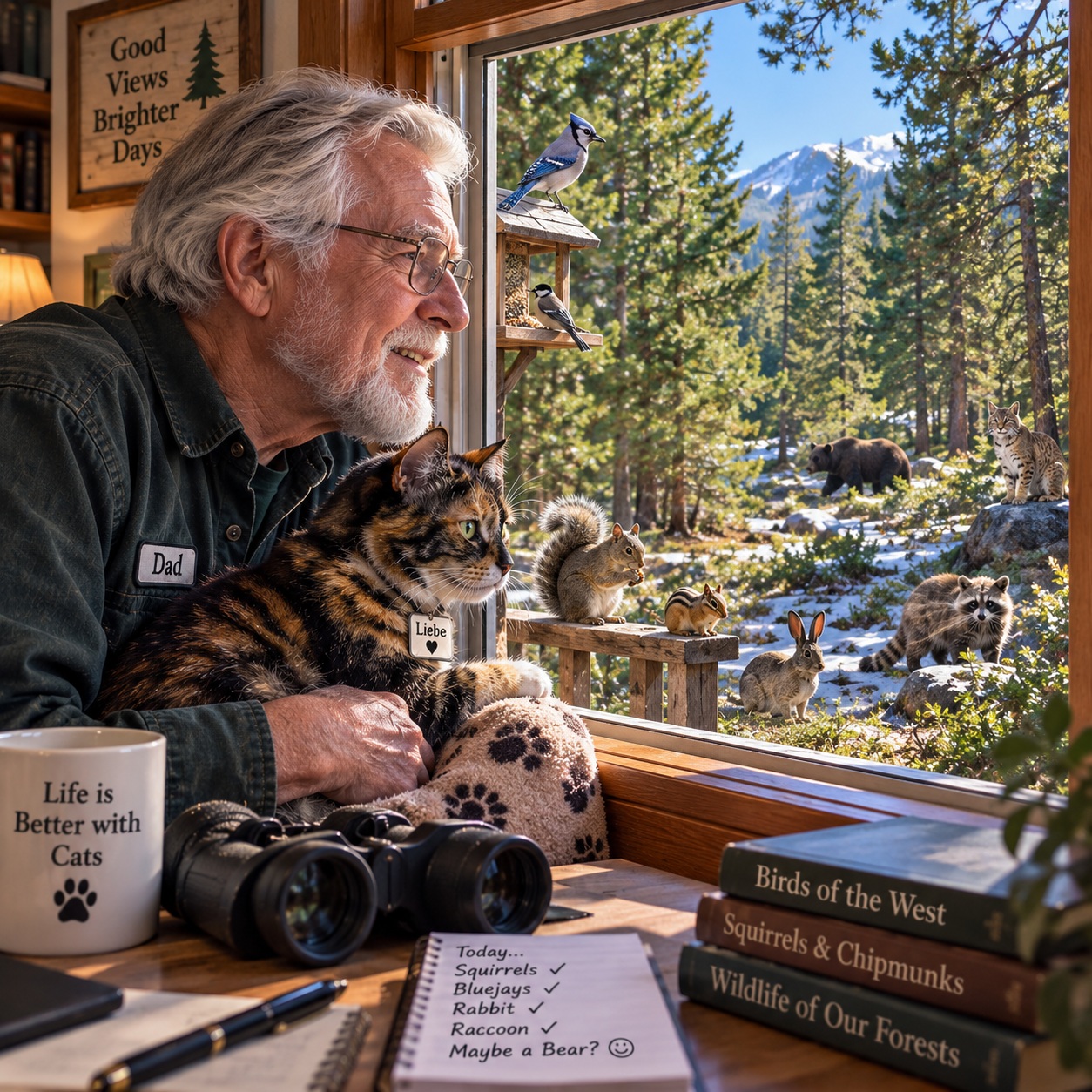
Graphic 1 — Our Morning Together
Each morning, Dad and Liebe open the upstairs living-room window and look out at the beautiful forest surrounding their home.
Together they watch squirrels racing through the trees, chipmunks searching for food, rabbits moving quietly through the brush, and blue jays and other birds arriving for another day. Occasionally a raccoon, bobcat, or even a bear passes through.
To someone else, it might seem like an ordinary morning.
To Dad and Liebe, these peaceful moments together are part of what makes a house a home.

Graphic 2 — A Simple Check-In Can Save a Life
Then, without warning, everything changes.
Dad is lying motionless on the floor beside his computer. He may still be alive, but he cannot reach the telephone or call anyone for help.
Liebe stays beside him. She places herself against Dad's chest, unwilling to leave the person she loves. But there is one thing even a completely devoted cat cannot do.
She cannot call for help.
For older people who live alone, a telephone call, text message, or simple visit from someone who cares can sometimes make an enormous difference.
Staying in touch matters.
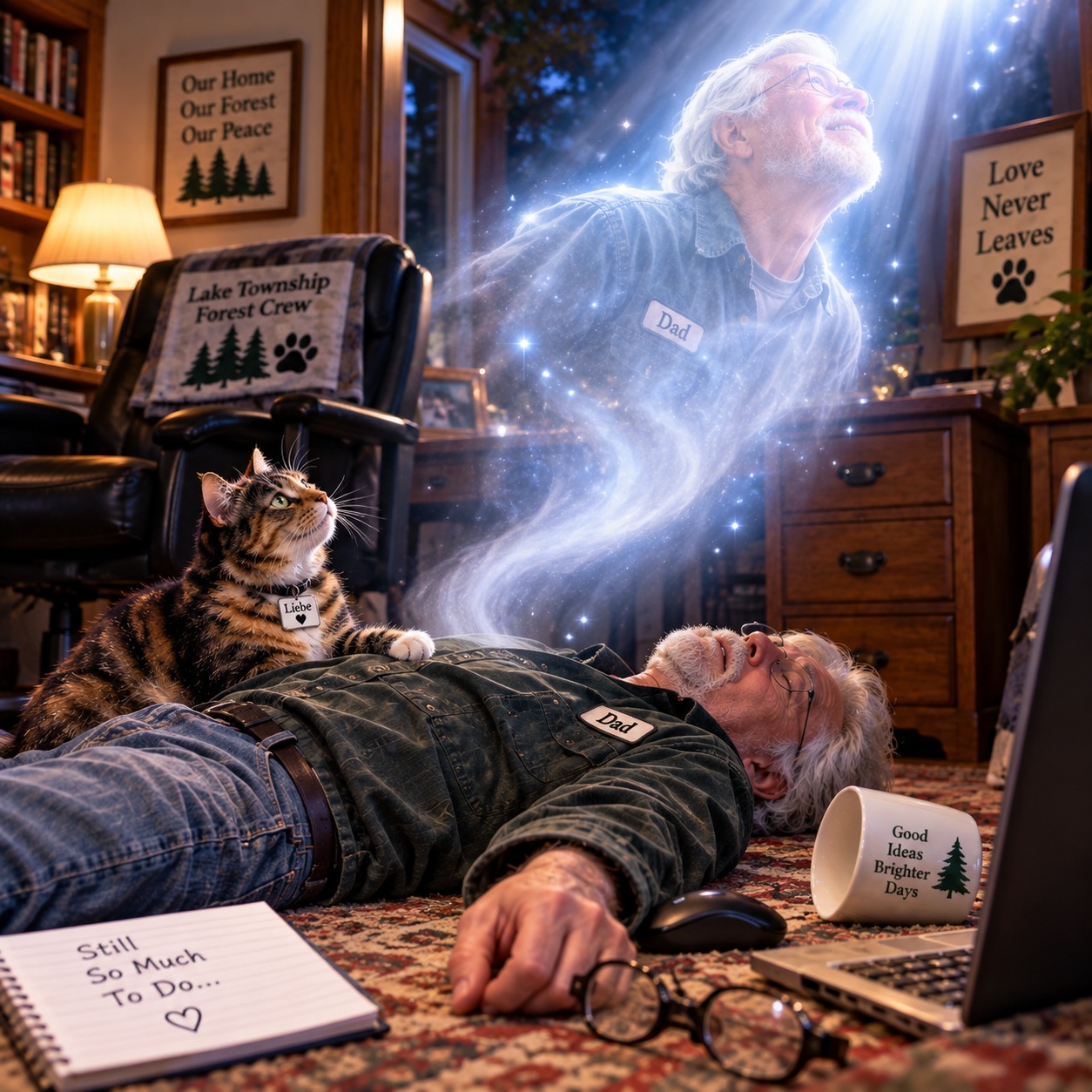
Graphic 3 — Somewhere Between Here and There
As Liebe watches Dad lying motionless, something extraordinary seems to happen.
A glowing presence begins to rise from his body.
Some people who have survived Near-Death Experiences (NDEs) describe feeling as though their consciousness separated from their physical body. Some report seeing their body from another location, traveling toward a light, or experiencing a presence that seemed more real to them than an ordinary dream.
In our story, Liebe cannot understand what she is witnessing.
She only knows that something belonging to Dad appears to be leaving—and she watches, startled and curious, as it rises toward the light.
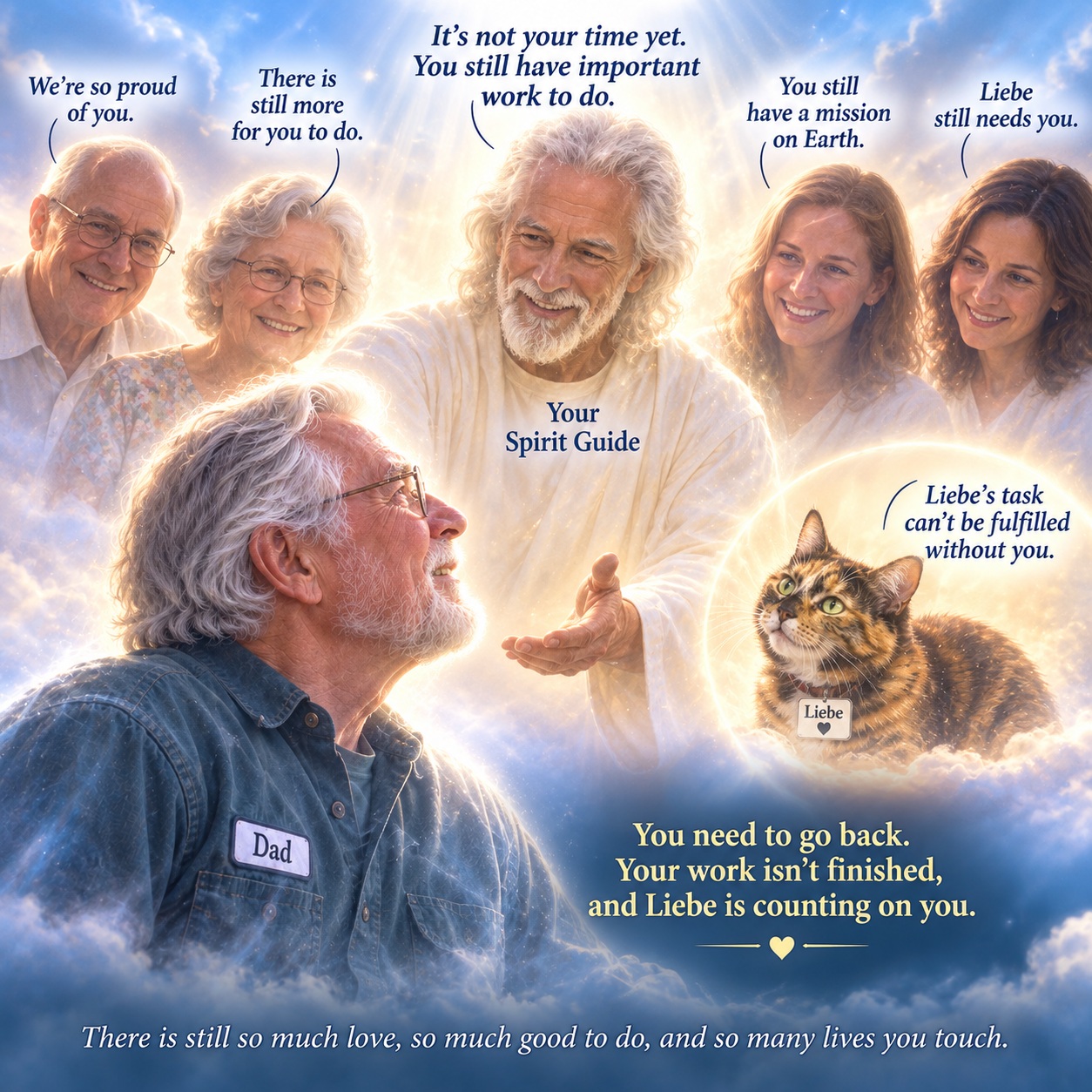
Graphic 4 — You Have to Go Back
Dad suddenly finds himself surrounded by light.
Waiting for him are his Spirit Guide and members of his Soul Family—loved ones who left earthly life before him.
They welcome him with love, but their message is unexpected.
“You cannot stay. You still have work to do.”
Dad's earthly task has not been completed. And there is another reason he must return.
Liebe still has her own journey ahead of her—and part of that journey is connected to Dad.
Accounts of Near-Death Experiences sometimes include people describing encounters with deceased relatives, spiritual beings, or guides. Others report being told that it was not yet their time and that they needed to return to their bodies.
Whether such experiences are understood spiritually, medically, or as mysteries that remain unexplained, they can profoundly affect the people who experience them.
For
Dad, the message is simple.
Go back. Someone still needs you.

Graphic 5 — Liebe Sees Dad Move
Back in the quiet room, Liebe is still beside Dad.
Then something happens.
Dad moves.
He begins to sit up.
Liebe freezes for an instant, startled by what she is seeing. Fear gives way to curiosity—and then to something unmistakable.
Hope.
Dad is alive.
Whatever happened during those mysterious moments, he has returned to the room, to his home—and to the little cat who refused to leave his side.
Liebe doesn't need anyone to explain what happened.
Dad came back.
That is enough.

Graphic 6 — Please Don't Ever Leave Me
Liebe throws herself into Dad's arms.
All the fear she experienced while watching him lie motionless disappears into one enormous expression of love.
If Liebe could put her feelings into human words, perhaps they would be exactly these:
“Please don't ever leave me. I was so scared you were gone forever.”
Dad holds her tightly.
There are no Spirit Guides in the room now. No glowing lights. No questions about what exists beyond this life.
There
is simply an old man sitting on the floor holding the
little animal who loves him—and realizing once again
just how precious being here can be.
Wrap-Up Narrative — Still Here, With More to Do
No one knows with certainty what happens at the boundary between life and death. Yet many people who have survived Near-Death Experiences (NDEs) have described remarkable events: feeling separated from their physical body, moving toward light, encountering deceased loved ones or spiritual beings, and sometimes being told that they must return because their life is not yet finished.
Whether these experiences are understood as spiritual journeys, events produced by the brain during a medical crisis, or something science does not yet fully understand, the people who experience them often describe them as profoundly real and life-changing.
In our story, Dad's journey carries a simple message. His Spirit Guide and Soul Family remind him that there is still work to do, still love to give, and still a little tortoiseshell cat whose own journey remains connected to his.
And Liebe doesn't need to understand Near-Death Experiences.
She only knows that the person she loves was lying motionless on the floor—and then he came back.
When Dad opens his eyes, Liebe's fear becomes joy. She throws herself into his arms with the only message that matters to her:
“Please don't ever leave me. I was so scared you were gone forever.”
Perhaps that is one lesson worth carrying away from the many stories people tell about NDEs: whatever may await us beyond this life, the love we give while we are here matters now.
There are people to check on.
Animals depending upon us.
Kindness still to give.
Stories still to tell.
And sometimes, apparently, there is still so much to do—together. ❤️😸
LOVE WITHOUT FEAR
Are there religions that teach God is pure Love, the Divine lives within us, and no one is condemned for believing differently?
Explore What We Found


What Religions in the World Meet the Following Criteria?
A Worldwide Search for Spiritual Traditions Centered on Divine Love, Compassion, and Freedom From Fear
Religions have developed in almost every part of the world. Some have hundreds of millions of followers. Others are practiced by relatively small communities and may be almost unknown outside those communities.
For this investigation, popularity does not matter.
We are not asking which religion is the oldest, largest, most influential, or “best.” Nor are we judging the character of the people who practice any religion.
We are asking a much narrower question:
Are there religions or spiritual traditions whose teachings bring together three particular beliefs about God, humanity, and the way we should treat one another?
After researching both well-known and lesser-known traditions, the answer is yes—but the number of traditions that clearly satisfy all three requirements is surprisingly small.
That is partly because our definition is intentionally strict.
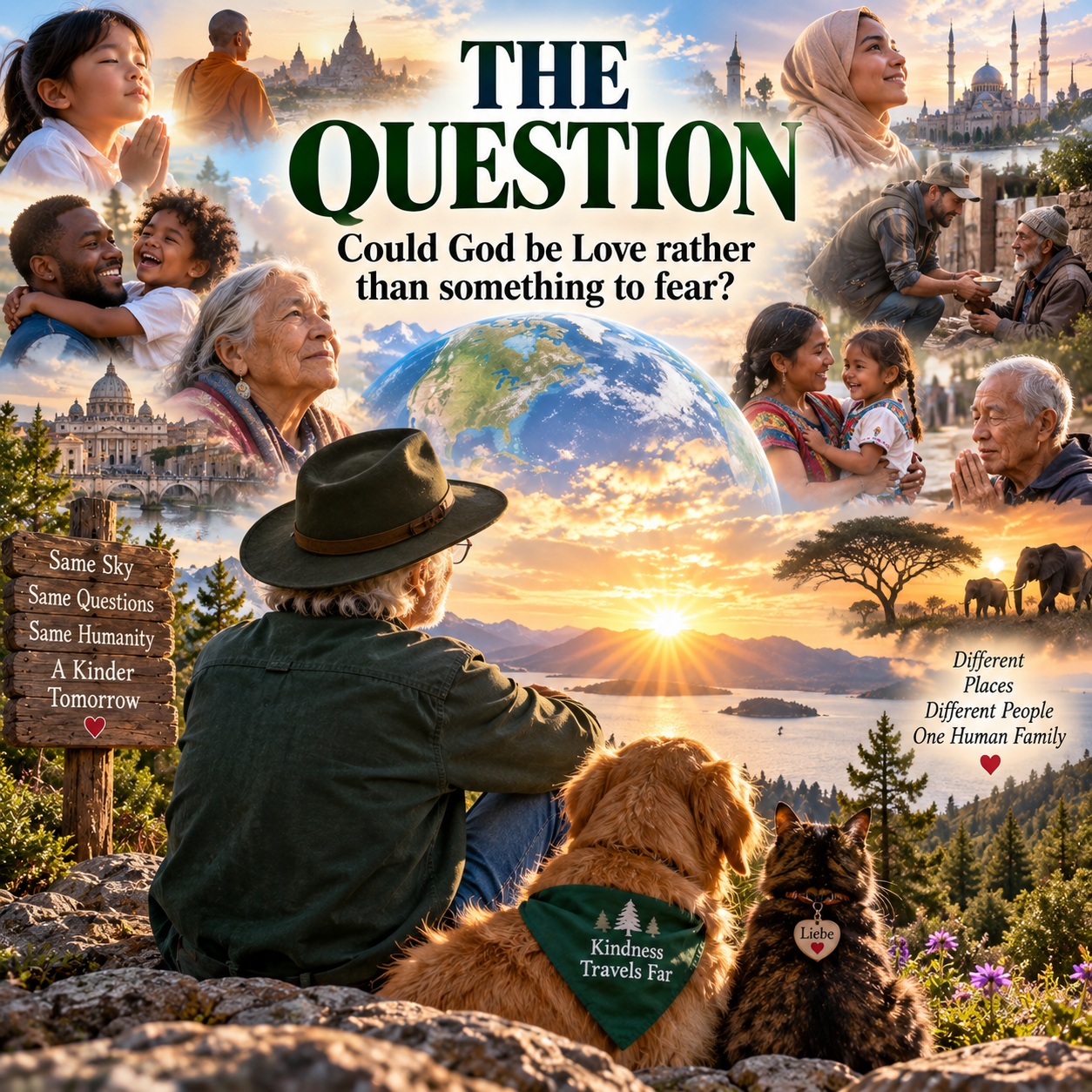

The Three Criteria
1. God/Source is pure love and dwells within us.
Whatever name the tradition uses—God, Source, Divine Mind, Universal Spirit, Infinite Intelligence, or another name—the ultimate Divine is fundamentally Love, and that Divine presence exists within every person.
2. Love and compassion are the central way of living.
Kindness, compassion, forgiveness, helping others, respect, and love are fundamental—not merely secondary teachings.
3. No Hell and no punishment for disbelief.
Source does not condemn people to Hell or another supernatural place of punishment, and people aren't punished simply because they reject the religion, question its teachings, leave it, or follow another spiritual path.
Personal
responsibility does not automatically disqualify a
tradition. A teaching that our actions naturally have
consequences is different from teaching that God
punishes someone for failing to accept a particular
religion.
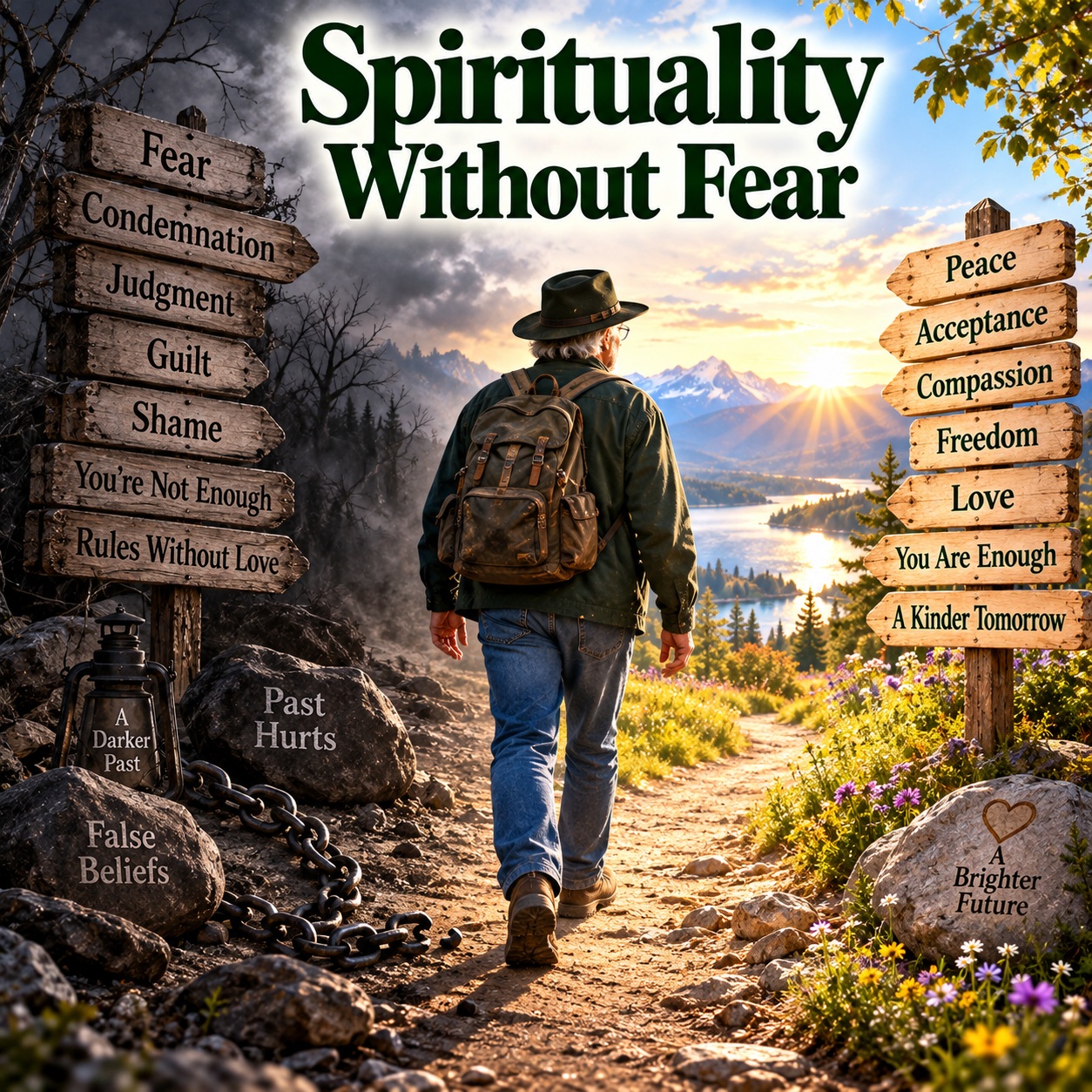
A Clarification About the Word “Hell”
The word hell can have more than one meaning. In this story, when we speak of Hell as part of our three-part test, we mean a supernatural after-death place or condition of punishment. We are not referring to the common expression “hell on Earth,” which describes severe suffering that people may experience during their earthly lives.
Some spiritual traditions also use words translated as hell symbolically or psychologically to describe suffering, fear, anger, despair, or other painful states that can be experienced here and now. Simply using the word “hell” does not automatically disqualify a spiritual tradition from our search. We must look at what that tradition actually means by the word.
Our question is more specific: Does the teaching say that people are condemned to supernatural punishment simply because they do not believe, question religious teachings, leave a religion, or follow a different spiritual path?
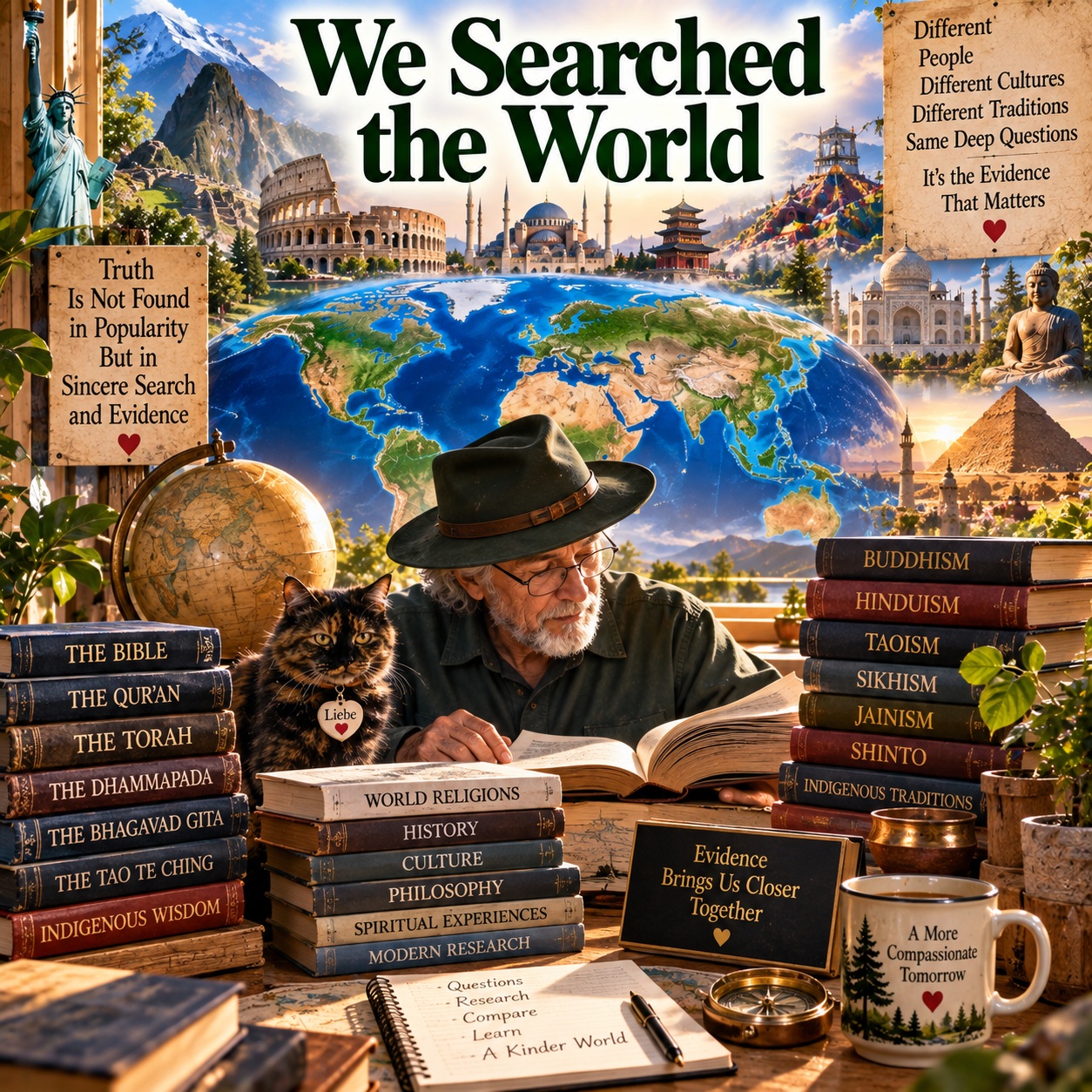
How This Search Was Conducted
This investigation deliberately went beyond lists of the world's major religions.
I examined established religions, denominations, New Thought movements, modern spiritual religions, non-denominational traditions, and smaller spiritual movements. Whenever possible, I used the organizations' own statements of belief and teachings. Historical and academic sources were used when necessary.
A tradition was not placed on the main list simply because it teaches kindness.
It had to provide reasonable evidence for all three requirements.
This distinction eliminated several traditions that might initially appear to qualify. Buddhism, for example, makes compassion extraordinarily important, but Buddhism does not teach a Creator God who is pure Love and dwelling within everyone, and many Buddhist traditions recognize hell-like naraka realms. Swedenborgian Christianity teaches that God is Divine Love and does not cast anyone into Hell, but it nevertheless teaches that Hell exists as a spiritual state people may freely choose. (Swedenborgian Church)
The result is not an exhaustive census of every small spiritual community on Earth. Some traditions lack enough accessible authoritative material to establish all three criteria. What follows is a conservative list of traditions for which the evidence is unusually strong.
Traditions That Meet the Three Criteria

1. Unity
Geographic
origin: Kansas City, Missouri, United States
Beginning:
1889
Founders:
Charles and Myrtle Fillmore
Tradition:
New Thought / metaphysical Christianity
Unity began in Kansas City in 1889 after Myrtle and Charles Fillmore became involved with New Thought ideas concerning prayer, healing, and the relationship between human consciousness and God. It eventually developed into an international spiritual movement. (Unity)
God Is Love—and God Is Within
Unity's teachings fit our first criterion remarkably closely.
Its Five Principles teach that divine energy is everywhere, underlies all existence, and that human beings are inherently good because they are expressions of Spirit. Prayer and meditation are understood as ways of connecting with our spiritual nature within God. (Unity)
Unity literature goes even further. One teaching explains that “God is love” describes what God is, not merely something God possesses, and describes human beings as expressions of that Divine Love. Another states that the primary source of love is within us because God is Love and humans are expressions of that Love. (Unity)
Unity also describes the Divine as the indwelling Spirit present in every being. (Unity)
Love and Compassion as a Way of Life
Love, forgiveness, service, and compassion run throughout Unity teaching.
Unity describes compassion as love in action and connects it directly to the teaching that God is Love. Forgiveness is treated as a major spiritual practice, and Unity literature teaches that divine love works through human beings when hatred and resentment are released. (Unity)
No Hell and No Punishment for Believing Differently
Unity explicitly rejects the traditional concept of Hell as a place where God punishes people after death.
Its official explanation says that an infinitely loving and omnipresent God is incompatible with eternal damnation. Unity sometimes uses the word hell metaphorically for the suffering humans experience when they mistakenly believe themselves separated from God—but not as a supernatural destination where God sends unbelievers. (Unity)
Equally important for our third requirement, Unity honors different spiritual paths. Its headquarters says people do not even have to believe in God to make use of Unity teachings, that Unity has no required dogma, and that it honors all spiritual paths. Another Unity explanation says different paths can lead toward the same Divine reality. (Unity)
Why Unity Qualifies
Unity provides unusually direct evidence for all three requirements:
God is Love. The Divine is within us. Love, compassion and forgiveness are central. There is no afterlife Hell of divine punishment. Other spiritual paths are honored rather than condemned.
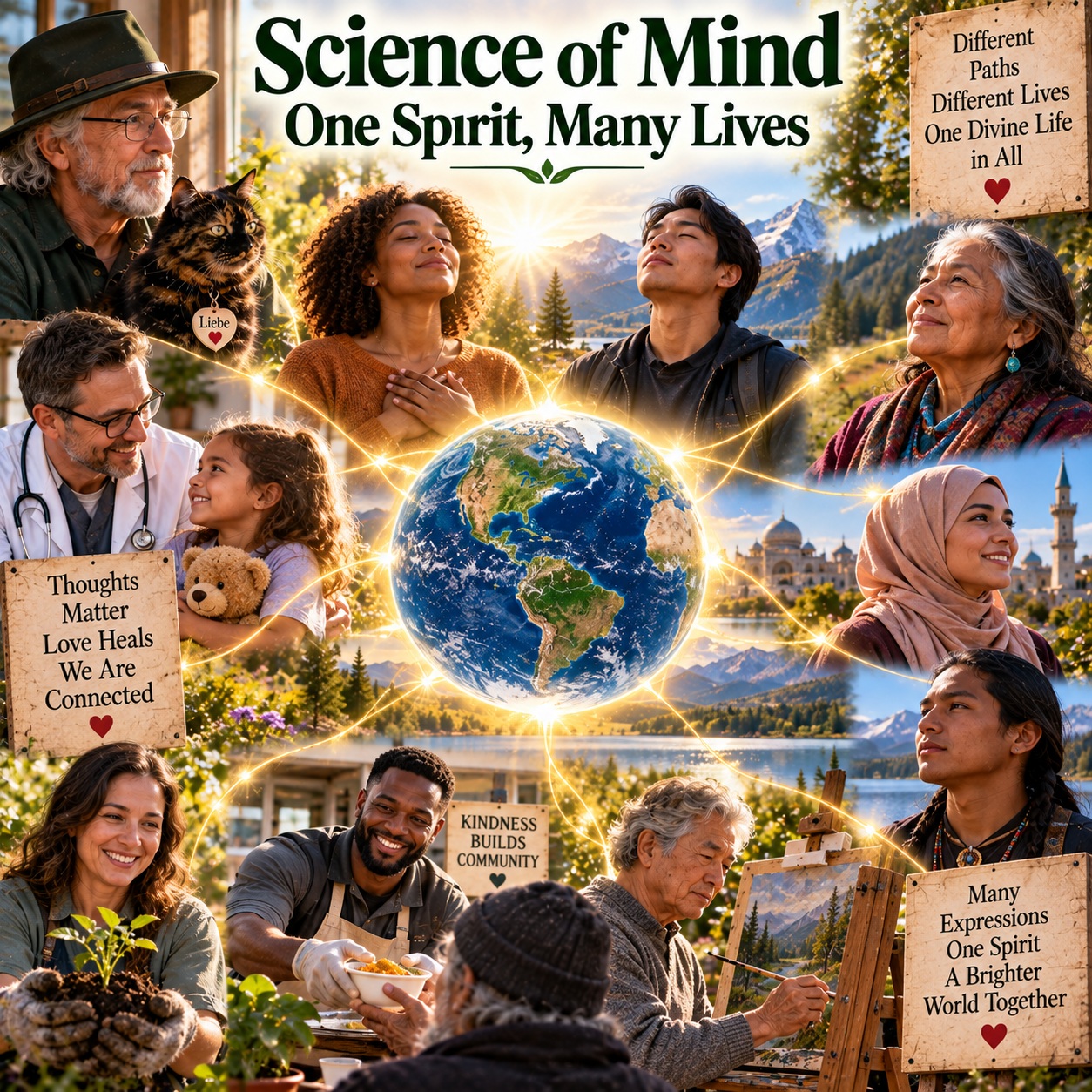
2. Science of Mind / Religious Science / Centers for Spiritual Living
Geographic
origin: Los Angeles, California, United
States
Beginning:
1920s; formally organized in 1927
Founder:
Ernest Holmes
Tradition:
New Thought
Ernest Holmes developed the spiritual philosophy known as Science of Mind, eventually establishing the Institute of Religious Science and School of Philosophy in Los Angeles in 1927. Today's Centers for Spiritual Living continue that tradition internationally. (CSLGLV)
God Is Within Everyone
Holmes' Declaration of Principles states that all people are individual expressions of one Spirit.
It teaches that heaven is within us, that the “highest God and the innermost God” are one, and that human beings can experience God as an indwelling presence. It concludes by affirming the eternal goodness and loving-kindness of Life and saying that the life within all beings is God. (Centers for Spiritual Living)
A contemporary Center for Spiritual Living puts the idea even more simply:
“God is love and so are you.” (Center for Spiritual Living)
Love and Compassion
Centers for Spiritual Living identifies Love, Oneness, Healing, Service, Diversity, and Spiritual Growth among its central values. Its communities teach that every individual is an expression of God and that human beings are connected through Divine Life. (Center for Spiritual Living)
The movement also teaches respect for other religious paths. Centers for Spiritual Living says it honors all paths to God and welcomes people from many spiritual traditions. (Pacific Coast Spiritual Living)
No Hell or Eternal Damnation
Here the evidence is exceptionally clear.
Science of Mind explicitly rejects eternal damnation. It teaches that God does not create human life only to condemn it.
It also says Heaven and Hell are states of mind rather than literal geographical places. Difficulties are understood as consequences people may bring upon themselves, not divine punishment for believing incorrectly. (Center for Spiritual Living)
Holmes' Declaration of Principles goes further by saying that the ultimate liberation from discord will eventually be attained by everyone. (Centers for Spiritual Living)
Why Science of Mind Qualifies
Science of Mind teaches an indwelling God whose nature includes eternal loving-kindness, regards people as expressions of the Divine, emphasizes Love and Oneness, welcomes other spiritual paths, and rejects both literal Hell and eternal divine condemnation.
It is one of the clearest matches found in this research.

3. ECKANKAR
Geographic
origin: United States
Modern
beginning: 1965
Modern
founder: Paul Twitchell
Current
spiritual headquarters: Minnesota
Tradition:
Independent modern religion emphasizing direct spiritual
experience
ECKANKAR is particularly interesting because it developed outside conventional Christianity and New Thought organizational structures.
Paul Twitchell introduced the modern ECKANKAR movement in 1965. The organization describes itself as a path of personal spiritual experience and spiritual freedom. (Eckankar)
God as an Ocean of Love
ECKANKAR describes God in language that fits our first criterion unusually well.
Its official teachings say God's spiritual essence is Divine Love and symbolically describe God as an “Ocean of Love and Mercy.”
Every human being, according to ECKANKAR, is fundamentally Soul—an eternal divine spark of God. The purpose of spiritual development is ultimately to learn to love as God loves. (Eckankar)
A recent teaching from its current spiritual leader says that God is the Ocean of Love and Mercy, that everyone is equally loved by the Creator, and that the Divine message is essentially to receive that love and then give it outward through service to others. (Eckankar)
Love as the Purpose of Spiritual Life
ECKANKAR places Divine Love at the center of its spiritual path.
Its official description begins with Love, encouraging followers to experience unconditional love in daily life. It says a genuine spiritual path should help people become capable of greater love and mercy toward themselves and others. (Eckankar)
Its teachings describe the ultimate destiny of Soul as becoming a conscious vehicle for God's love. (Eckankar)
Hell, Karma, and Spiritual Freedom
ECKANKAR believes in reincarnation and karma, so it does teach consequences for human actions. However, those consequences are not punishment for refusing to believe ECKANKAR.
Its own material says, “We make our own heaven and hell,” treating these as conditions created through consciousness and actions rather than an eternal place of divine punishment. (Eckankar)
Its teachings emphasize that each Soul has its own path toward God. It explicitly recognizes the spiritual importance of figures from other religions, including Jesus, Buddha, and Muhammad, and teaches respect for other people's religious freedom. Independent academic research on ECKANKAR likewise documents its strong emphasis on personal choice and its discouragement of aggressive proselytizing. (Religions in Minnesota)
Karma therefore needs an important qualification: ECKANKAR believes actions have consequences across lifetimes, but holding the wrong religious belief is not presented as grounds for God's condemnation.
Why ECKANKAR Qualifies
ECKANKAR teaches that God's essence is Divine Love, every person is fundamentally an eternal spark of God, life's spiritual purpose involves learning Divine Love, and people are free to follow their own spiritual paths without being threatened with an eternal Hell for disbelief.
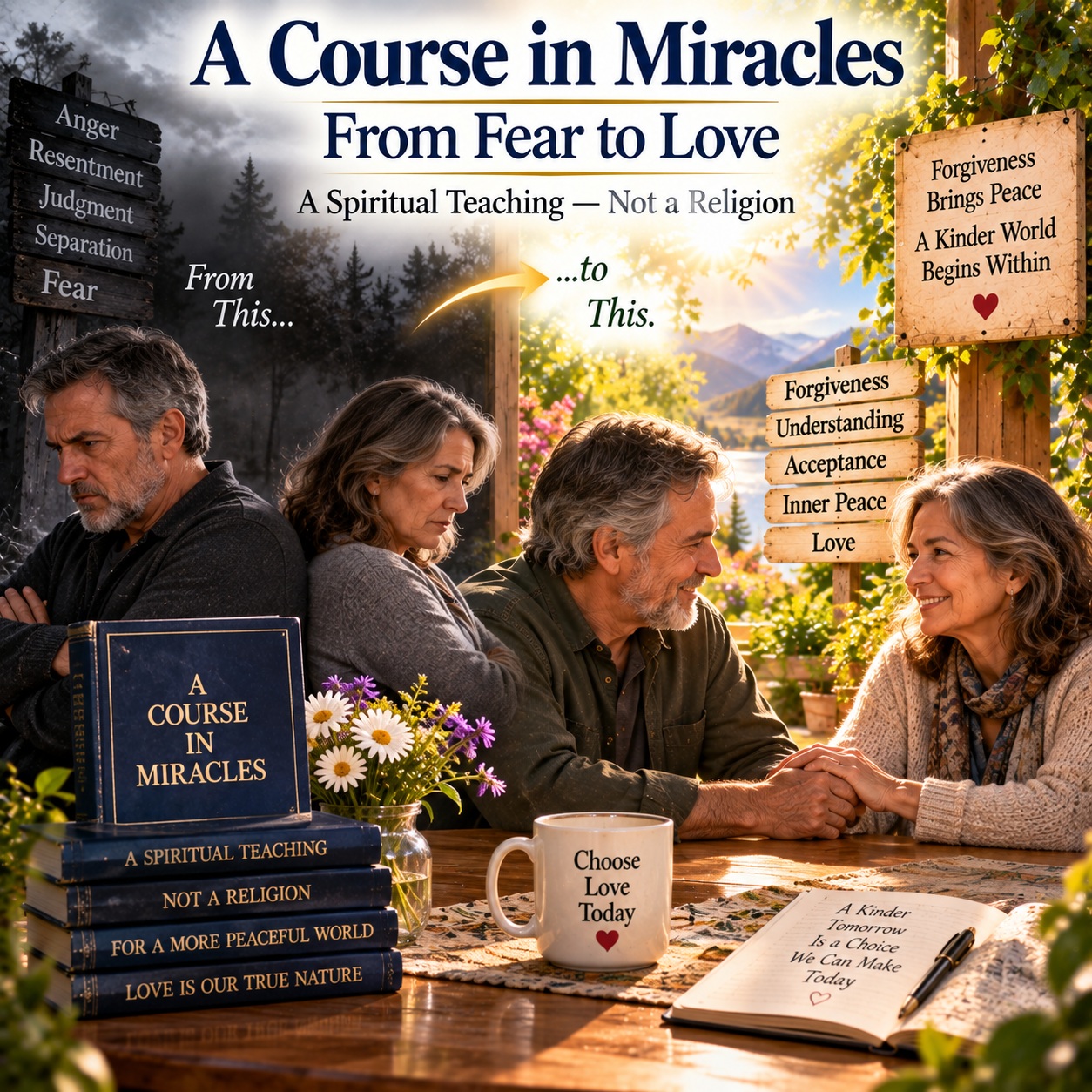
4. A Course in Miracles — A Spiritual Tradition Rather Than a Religion
Geographic
origin: New York City, United States
Beginning:
Material recorded from 1965–1972; first widely published
in 1976
Principal
early figures: Helen Schucman and William
Thetford
Classification:
Nonsectarian spiritual teaching rather than an organized
religion
This one requires a label of its own.
A Course in Miracles (ACIM) explicitly says that it is not a religion. It is a spiritual teaching and self-study system. Because our investigation intentionally includes spiritual traditions as well as formal religions, however, it deserves inclusion. (ACIM)
The Course began in New York when Columbia University psychologists Helen Schucman and William Thetford decided there had to be a better way of dealing with the conflict around them. Schucman subsequently reported receiving the material through inner dictation, which she identified as coming from Jesus. That is the tradition's account of its origin; it is a spiritual claim rather than something historical research can independently establish. (ACIM)
God Is Love—and We Share That Nature
The Foundation for Inner Peace, the authorized publisher, summarizes ACIM's purpose as awakening people to their oneness with God and removing obstacles that block awareness of Love.
Its explanation of the teaching says that God is Love and that humans share that same essence of Love with God. (ACIM)
That is an exceptionally close fit to our first condition.
Love, Peace, and Forgiveness
ACIM teaches that the way toward universal love and peace is through forgiveness and the healing of relationships.
Its authorized introduction describes a miracle not primarily as a supernatural event but as a movement in perception from fear toward love. (ACIM)
The Course also teaches that God has never condemned humanity; forgiveness is necessary because human beings condemn, whereas Divine Love does not. (A Course In Miracles)
No Hell and No Exclusive Religion
The Course explicitly says that Hell does not exist as an ultimate supernatural reality. (Wikisource)
Just as significantly, it does not claim to be the only spiritual road to God. Its authorized publisher says ACIM considers itself only one version among many forms of a universal spiritual curriculum. It requires no church membership, and the publisher specifically says it is not intended to become a religion or cult. (ACIM)
Why A Course in Miracles Qualifies
Although ACIM is not technically a religion, it may be one of the closest matches to the three beliefs in the entire survey:
God is Love. Humanity shares in that Divine Love. Forgiveness and love are central. God does not condemn. Hell is rejected. And ACIM explicitly recognizes other spiritual paths.
For our eventual story, I would retain it—but clearly label it a spiritual teaching, not a religion.
A Broader Movement Worth Recognizing: International New Thought Alliance
There is another finding too important to ignore.
The International New Thought Alliance (INTA) is not one denomination. It is an umbrella organization connecting a range of New Thought traditions.
Its current Declaration of Principles says that the Divine nature dwells within and expresses through each person. It explicitly affirms freedom of belief and human diversity. And it calls unconditional love, promoting the good of everyone, helping one another, and living peacefully together the highest spiritual principle. (New Thought Alliance)
Those statements strongly satisfy our first two criteria and the freedom-of-belief portion of our third.
However, its current Declaration does not explicitly state that no post-death Hell exists. Because our rules require positive evidence rather than assumptions, I would not count INTA itself as a fifth confirmed match.
That conservative decision illustrates how strict this investigation has been.

Close, But Not an Exact Match
Several traditions deserve recognition because they come remarkably close, but one or more requirements prevent us from placing them on the confirmed list.
Home of Truth — This small New Thought tradition began in the San Francisco Bay Area in the late nineteenth century. Its current principles explicitly say “God is Love,” emphasize human oneness, forgiveness, peace, respect for all paths, the Divine within, freedom of belief, and unconditional love. Its history also describes the Divine as within and throughout life. (Home of Truth) The problem is evidentiary: I could not find a sufficiently authoritative current statement explicitly rejecting every supernatural Hell or post-death punishment. Given our strict rules, that leaves criterion 3 unconfirmed, not disproved.
Divine Science — Emerging in the United States in the late nineteenth century, Divine Science teaches God's omnipresence and explicitly says that the Spirit of God dwells within us. It teaches oneness with God and the unity of life. (Divine Science) But its accessible authoritative statements did not establish our unusually strict “no Hell whatsoever” requirement clearly enough. Therefore it remains a close candidate rather than a confirmed one.
Universal Foundation for Better Living (UFBL) — Founded by Rev. Dr. Johnnie Colemon in Chicago in 1974, UFBL teaches God's omnipresence, humanity's divinity, that the Kingdom of God is within us, and that LOVE is the basis of right thought and action. It offers its teachings to everyone without distinction. (Universal Foundation for Better Living) Again, however, its official belief statement does not explicitly resolve our no-Hell requirement. It therefore remains unconfirmed.
Seicho-No-Ie — Founded by Masaharu Taniguchi in Japan in 1930, Seicho-No-Ie teaches that the genuine religions ultimately refer to one universal God under different names. It teaches that human beings are children of God, that the life within the individual is immortal, that love is life's nourishment, and that religious and sectarian divisions should be transcended. (Seicho-No-Ie) Yet its authoritative English materials do not establish clearly enough that God is fundamentally pure Love in precisely our sense or provide the explicit rejection of all supernatural Hell/punishment required by criterion 3.
Modern Spiritualism — The National Spiritualist Association of Churches teaches belief in “Infinite Intelligence,” continuation after death, the Golden Rule, personal responsibility, and that the door to spiritual reformation is never closed to any soul. It also opposes attempts to compel people to worship God in a prescribed way and supports freedom of conscience. (NSAC) Some Spiritualist traditions explicitly say there is no divine judgment and describe Heaven and Hell as self-created states rather than destinations. However, other major Spiritualist formulations speak of “compensation and retribution” after death. (Spiritualists National Union of WA Inc) More importantly, Spiritualism as a whole does not uniformly define Infinite Intelligence as pure Love dwelling within every person. So it does not cleanly satisfy our three-part test.
Unitarian Universalism — Modern UU congregations place extraordinary emphasis on love, pluralism, justice, generosity, human dignity, and freedom of belief. Modern UU identity is explicitly non-creedal, and its shared values are now organized around Love. (Assabet Valley UU Congregation) Its Universalist heritage also famously rejected eternal damnation. (HUUC) But modern Unitarian Universalists can be theists, atheists, agnostics, humanists, Buddhists, pagans, and more. Therefore the religion does not require belief that God exists, is pure Love, and dwells within everyone. It fails our first criterion precisely because it protects such broad theological freedom.
Historic Christian Universalism — Universalists argued that an infinitely loving God would ultimately save everyone. Some went further and rejected Hell entirely. However, historically there was disagreement: many Universalists accepted temporary punishment after death. (HUUC) Because our criterion says no Hell, rather than merely “no eternal Hell,” Christian Universalism as a whole cannot be included.
Quakerism / Religious Society of Friends — The Quaker concept of the Inner Light can closely resemble our idea of the Divine within every person, and Quaker practice has a powerful history of conscience, peace, equality, and compassion. But Quaker theology ranges considerably—from explicitly Christian groups to liberal and nontheistic Friends. There is no single uniform Quaker doctrine establishing all three requirements. It therefore cannot qualify as an entire religion under our strict test.
Baháʼí Faith — The Baháʼí writings strongly emphasize unity, love, service, the spiritual worth of humanity, and respect among religions. But Baháʼí teaching continues to use Heaven and Hell as spiritual conditions—nearness to and remoteness from God. That is very different from an eternal torture chamber, but our criterion specifically excludes a supernatural condition functioning as Hell. Therefore it does not meet our definition exactly.
Swedenborgian Christianity — Swedenborgianism teaches that God continually draws humanity toward love and does not cast people into Hell. Nevertheless, it explicitly teaches that Hell exists as a spiritual state freely chosen through selfishness and domination. (Swedenborgian Church) Under a broader definition it might qualify; under ours, it does not.
Buddhism — Compassion and loving-kindness are among Buddhism's great contributions to world spirituality. But most Buddhist traditions do not posit the Creator/Source required by criterion 1, and traditional Buddhist cosmology includes naraka, or hell realms. (The Theosophical Society) It therefore fails our test despite its profound teachings on compassion.
Jainism — Jainism's commitment to ahimsa, or nonviolence, is among the strongest ethical commitments to avoiding harm found in any world religion. But Jainism does not teach a supreme Creator God who is pure Love dwelling within humanity, and traditional Jain cosmology contains hell realms associated with karma. It therefore does not fit our specific definition.
Hindu and Vedanta traditions — Certain schools teach a profound identity or relationship between the Divine and the Self, making them highly relevant to the “God within” portion of our investigation. But Hinduism contains many distinct theological systems, and traditional cosmologies can include temporary hell realms (naraka) and karmic consequences after death. It would therefore be inaccurate to declare Hinduism as a whole a match.
Sikhism — Sikh teaching strongly emphasizes one God, Divine presence, compassion, equality, service, and seeing God throughout creation. Yet Sikh scripture and tradition also contain language concerning narak or hellish conditions and karmic consequences. Interpretations differ, but the tradition cannot safely be said to satisfy our absolute “no Hell” condition.
Taoism — Taoism can teach compassion, humility, harmony, and profound unity with the Tao. But the Tao is not straightforwardly equivalent to a Creator God whose essential nature is pure Love dwelling personally within everyone. Religious Taoism also developed complex afterlife cosmologies. It therefore does not satisfy our particular first and third criteria.
One Especially Interesting Borderline Case: ECKANKAR and Karma
ECKANKAR deserves one additional clarification because readers may ask whether karma itself violates criterion 3.
Our definition did not say that qualifying religions must believe actions have no consequences.
ECKANKAR teaches that people reap consequences from choices through karma and reincarnation. But it simultaneously describes God as an Ocean of Love and Mercy, regards every person as an eternal Divine Soul, and explicitly values each person's freedom to find his or her own path to God. (Eckankar)
Therefore, under the definition we established at the beginning, karma is treated as consequence and spiritual learning rather than punishment for disbelief.
Someone does not go to an eternal Hell because he failed to become an ECKist.
That distinction is important throughout this article.

What Did the Research Actually Reveal?
The first surprise is what the research didn't reveal.
It did not reveal dozens of religions neatly satisfying all three conditions.
When the requirements are applied strictly, many of the world's most compassionate spiritual traditions fail at least one condition—not because they are unloving religions, but because our question is unusually specific.
Some have no Creator God.
Some teach that the Divine is beyond categories such as “pure Love.”
Some emphasize compassion but retain hell realms or post-death purification.
Some reject Hell but don't teach that God dwells within every person.
Some teach an indwelling Divine but don't explicitly reject Hell.
And some are so diverse that no single theology can fairly be attributed to the entire religion.
But another pattern did appear.
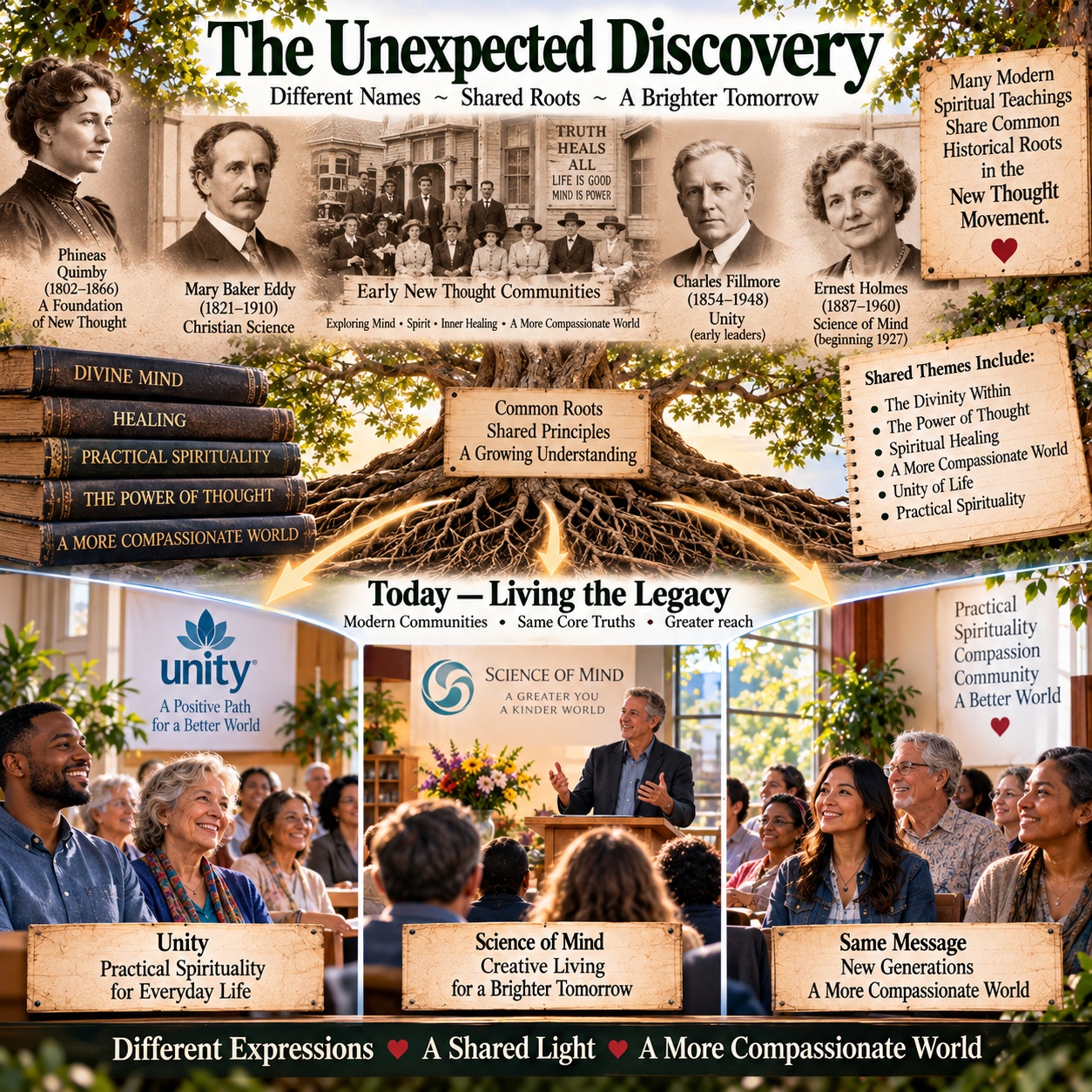
Three of our strongest documented institutional matches—Unity, Science of Mind, and several near-matches such as Divine Science, Home of Truth, and UFBL—belong to or emerged from the broader New Thought family.
That means we should not claim that five completely unrelated civilizations independently developed exactly the same theology. The evidence doesn't support that conclusion.
They influenced one another.
That discovery is important because our goal was to find the truth of the historical record rather than manufacture a more dramatic story.
Yet then we encounter ECKANKAR, a later independent religious movement whose theology also places extraordinary emphasis on Divine Love, the divine nature of Soul, spiritual freedom, and a journey toward God without eternal damnation. (Eckankar)
And we encounter A Course in Miracles, which explicitly refuses the label of religion yet independently presents an unusually close formulation: God is Love, humans share that Love, forgiveness is the path, God never condemned humanity, Hell ultimately has no reality, and no single spiritual system has a monopoly on the road to God. (ACIM)
That is more interesting than the conclusion we might have written before doing the research.
Wrap-Up Narrative
Love Without Fear
Human beings have asked questions about God for thousands of years.
Who—or what—is God?
Where is God?
What does God expect from us?
What happens when we die?
And perhaps one of the most important questions of all:
Would a God who is pure Love punish someone simply because that person believed differently?
Religions have answered those questions in many different ways.
This investigation did not attempt to decide which answers are correct. It asked something narrower: Which spiritual traditions bring together three particular ideas?
That God or Source is fundamentally Love and present within us.
That love and compassion should guide the way we live.
And that spiritual life does not depend upon fear of Hell or punishment for believing incorrectly.
The answer turned out to be more complicated than expected.
Some religions contain one of these ideas.
Many contain two.
Far fewer could be clearly documented as teaching all three.
Among the strongest matches were Unity, Science of Mind/Centers for Spiritual Living, and ECKANKAR. A spiritual teaching rather than a religion, A Course in Miracles, also matched the three conditions unusually closely.
Around them we found another circle of traditions that approached the same ideas but could not honestly be said to satisfy every requirement.
And perhaps there is something meaningful in that result.
It suggests that love and compassion are not owned by any single religion.
They appear in Christianity, Buddhism, Sikhism, Jainism, Hindu traditions, Spiritualism, New Thought, Unitarian Universalism, and many other spiritual paths—even when those traditions disagree profoundly about God, death, judgment, reincarnation, salvation, and the nature of reality.
Our three conditions are therefore not a definition of a “good religion.”
They are simply one particular spiritual vision:
Source is Love (Unconditional Love).
We are called to express that Love through compassion for one another.
And spiritual understanding need not be created through fear.
Perhaps the most important discovery is not how many religions made our list.
Perhaps it is that across traditions that disagree about almost everything else, human beings repeatedly return to a remarkably simple idea:
Love one another.
For some people, that instruction comes from God.
For others, from conscience.
For others, from an understanding that all life is connected.
And for still others, it simply comes from looking at another living being and recognizing something of ourselves.
Whatever its source, compassion becomes real only when it leaves the pages of a religious book and enters the way we treat the person—or animal—standing in front of us.
And perhaps that is where any serious investigation of Divine Love ultimately has to end:
Not with the name of a religion.
But with how we live.
❤️🌎
Return to Table of Contents
THE DAY THEY BOTH MISSED TODAY
A Story About the Past,
the Future, and the Life Happening in the Present
Introductory Narrative
Most of us spend some time thinking about
yesterday and tomorrow.
We remember people we loved, places we have been,
mistakes we wish we could change, and wonderful moments
we would gladly experience again. We also think about
tomorrow—our plans, responsibilities, hopes, worries,
and all the things we intend to do someday.
There is nothing wrong with remembering the past or
preparing for the future. Both are important parts of
being human.
But sometimes we become so busy looking backward or
looking ahead that we overlook the only part of life
actually happening around us:
Today.
This is the story of Thomas and Claire—two
good people who lived on the same street, passed the
same porch, and were offered the same simple gift.
Neither realized how valuable that gift was until it was
gone.

Graphic 1 — The Day They Both Missed Today
Thomas,
Claire, and Rose lived in the same quiet neighborhood.
Thomas was 72. He had experienced a long and happy
marriage with his wife, Margaret, and had accumulated a
lifetime of wonderful memories.
Claire was 48. She was hardworking, responsible, and
always planning for a better future.
And then there was Rose.
At 80, Rose wasn't particularly interested in yesterday
or tomorrow. She enjoyed the flowers blooming today, the
hummingbird visiting today, and the neighbor walking
past her porch today.
Beside Rose's little table were three chairs.
She rarely needed all three.
But she always kept them ready.

Graphic 2 — Thomas Lives in Yesterday
Margaret
had been gone for several years, but Thomas still loved
looking through their photographs.
Their wedding. Their children growing up. Vacations.
Birthdays. Christmas mornings. Ordinary afternoons that
hadn't seemed important when they happened but had
somehow become precious with time.
Thomas's memories weren't something he needed to escape.
They were part of a life well lived and a woman he still
loved.
But slowly, without realizing it, Thomas had begun
spending more time with the people in his photographs
than with the people still around him.
Yesterday had become so comfortable that today sometimes
passed without him noticing.

Graphic 3 — Claire Lives in Tomorrow
Claire
had a different problem.
She wasn't looking backward.
She was always looking ahead.
There were projects to finish, bills to pay, money to
save, plans to make, and goals to reach. Someday she
would travel. Someday she would slow down. Someday she
would have more time for friends.
She wasn't unhappy, and she certainly wasn't uncaring.
Claire simply believed that if she worked hard enough
today, eventually she would reach the point where she
could finally start enjoying life.
Outside her window, another beautiful sunset
disappeared.
Claire never saw it.
She was busy planning tomorrow.

Graphic 4 — Rose Lives Today
Rose's
life wasn't especially exciting.
On many afternoons, she simply sat on her porch.
She watched hummingbirds visit the flowers. She enjoyed
fresh strawberries and cold lemonade. She waved at
neighbors. Sometimes someone stopped to talk.
Rose understood something that Thomas and Claire had
temporarily forgotten.
Life doesn't consist only of weddings, vacations,
promotions, achievements, and other major events.
Much of life happens in very small moments.
A hummingbird hovering beside a flower.
A cool drink on a warm afternoon.
A conversation with someone who has nowhere else they
need to be.
And Rose always kept those extra chairs ready.

Graphic 5 — “Sit for Five Minutes, Thomas”
Thomas
passed Rose's porch one afternoon.
“Sit for five minutes, Thomas,” she called. “I've made
lemonade.”
Thomas smiled.
He liked Rose.
But he was on his way somewhere, and his thoughts were
already with Margaret and the life they once shared.
“Another afternoon, Rose.”
Rose smiled and waved goodbye.
Thomas continued walking.
Neither of them knew how many more afternoons there
would be.

Graphic 6 — “Maybe Tomorrow, Rose”
Claire
received the same invitation.
She was coming home from work, phone in one hand and her
bag over her shoulder.
Rose held up a glass of lemonade and motioned toward an
empty chair.
Claire smiled.
“I'd love to, Rose. Maybe tomorrow.”
Then she continued toward home while checking the next
item on her phone.
Behind her, the sky had turned brilliant shades of
orange and gold.
Rose watched the sunset.
Claire missed it.
There would always be another one.
Or so it seemed.

Graphic 7 — The Opportunities They Didn't Notice
The
days continued.
There were fresh strawberries.
There were neighbors stopping to talk.
There were children laughing.
There was a friendly dog looking for attention.
There were birds, flowers, sunsets, and ordinary
conversations.
Nothing spectacular happened on Rose's porch.
That was exactly the point.
Thomas continued passing while thinking about yesterday.
Claire continued passing while preparing for tomorrow.
And all around them were small pieces of today waiting
to be noticed.

Graphic 8 — One Morning, Something Is Different
Then
one morning, Rose wasn't sitting on her porch.
The flowers were still there.
So was the table.
And so were the three chairs.
But Rose was gone.
A note explained that she had moved to be closer to her
daughter.
There had been no tragedy. Rose was fine.
Life had simply changed.
Thomas stopped when he saw the empty porch.
A few moments later, Claire stopped too.
For perhaps the first time, they looked carefully at
those empty chairs.

Graphic 9 — “I Always Thought I'd Sit With Her Tomorrow”
Thomas
and Claire stood quietly together.
Neither had much to say.
Finally Thomas looked toward the chairs.
“I always thought I'd sit with her tomorrow.”
Claire looked at him.
Then she looked at the chair Rose had offered her so
many times.
“So did I.”
Thomas had spent so much time returning to yesterday
that he had missed some of today.
Claire had spent so much time preparing for tomorrow
that she had done exactly the same thing.
Two very different people had arrived at the same place.
And both had missed today.

Graphic 10 — They Finally Sit Down
Thomas
looked at Claire.
Claire looked at Thomas.
Then they did something remarkably simple.
They sat down.
At first the conversation was a little awkward. They had
lived near each other for years without really knowing
one another.
Then Thomas showed Claire a photograph of Margaret.
He told her a funny story about something Margaret had
once done.
Claire laughed.
Her phone remained on the table.
Thomas was talking about yesterday—but this time he
wasn't living there.
He was sharing yesterday with someone who was sitting
beside him today.
And Claire wasn't preparing for tomorrow.
For a little while, she was simply there.

Graphic 11 — “Would You Like Some Lemonade?”
The
porch gradually became part of their lives.
One afternoon, Thomas and Claire were sitting together
when another neighbor walked past with her dog.
Claire looked at the empty third chair.
Then she did exactly what Rose would have done.
“Would you like some lemonade?”
The neighbor smiled.
A few moments later, the third chair wasn't empty
anymore.
One conversation became another.
One neighbor introduced another.
More chairs eventually appeared.
Rose had moved away.
But something Rose had started remained behind.

Graphic 12 — Don't Miss Today
Thomas
still remembered Margaret.
He always would.
But now there were people sitting beside him who enjoyed
hearing those memories.
Claire still worked hard and planned for her future.
But sometimes she put away her phone, closed her
computer, and allowed tomorrow to wait.
One day they took a photograph of everyone gathered
around Rose's old table.
They mailed it to her.
On the back Claire wrote five words:
“Rose, we finally sat down.”
Miles away, Rose looked at the photograph and smiled.
Those three chairs had finally accomplished what she had
been quietly trying to do all along.
They brought people together.
Wrap-Up Narrative
There
is nothing wrong with looking backward.
Our memories help tell us who we are. The people we have
loved remain part of us, and remembering them can bring
comfort, gratitude, laughter, and sometimes tears.
There is nothing wrong with looking forward either.
We need plans. We need dreams. We need to prepare for
what may come next.
The danger begins when yesterday and tomorrow take so
much of our attention that there is nothing left for
today.
We can postpone a telephone call.
We can postpone visiting someone.
We can postpone sitting outside for ten minutes.
We can postpone playing with the dog, watching the
sunset, talking with a neighbor, telling someone we love
them, or accepting a glass of lemonade.
Each postponement seems insignificant.
But a life is largely made from those insignificant
moments.
Someday, many of today's ordinary experiences will
become the very memories we treasure.
So remember yesterday.
Plan for tomorrow.
But every once in a while, put everything else down.
Look around.
Someone may be waiting.
A sunset may be disappearing.
There may even be an empty chair beside a pitcher of
lemonade.
The past gave us memories.
The future gives us possibilities.
But the present is where life
happens.
Don't miss today. ❤️
The Pigeon Who Chose to Stay
"A
True Story"


Wrap-Up Narrative
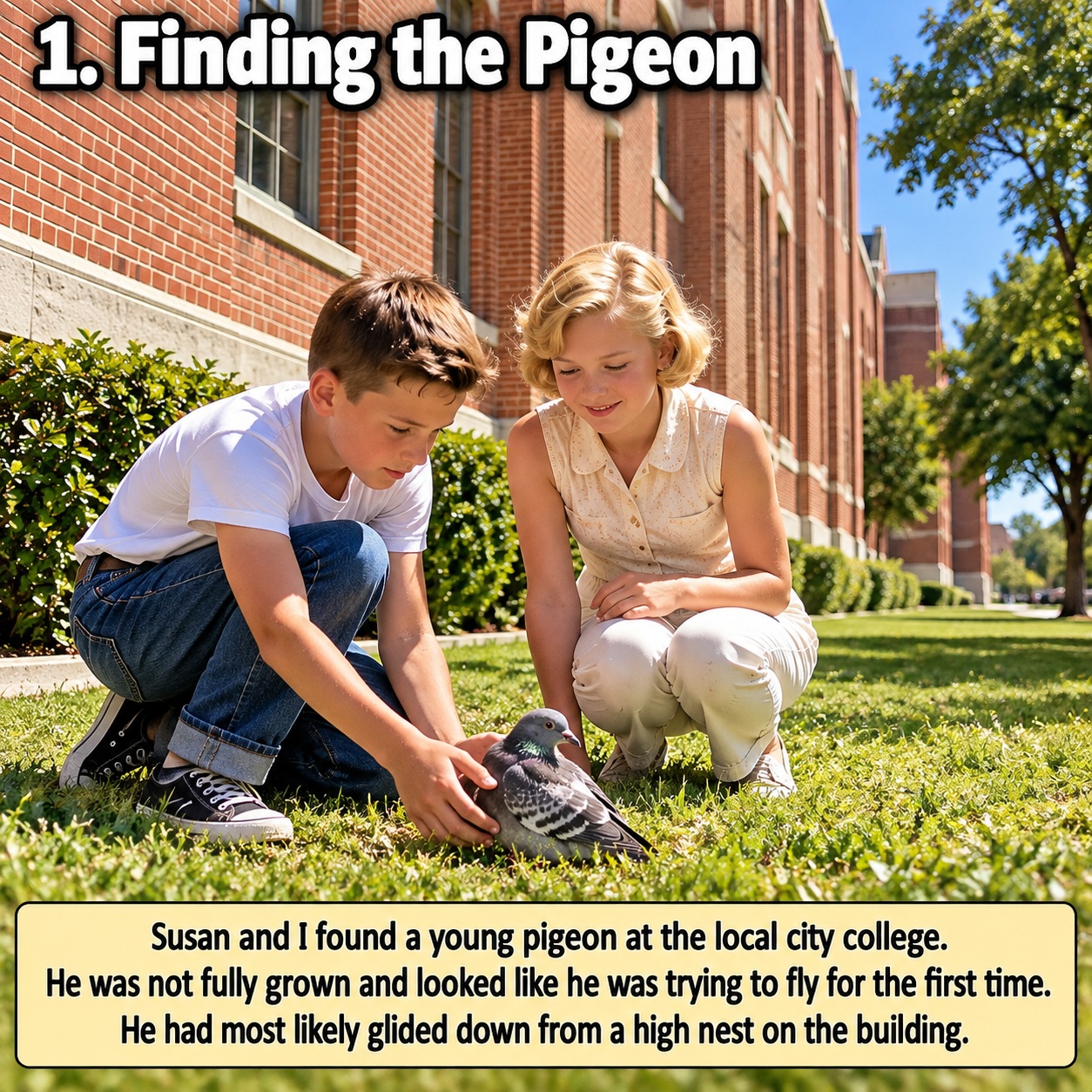
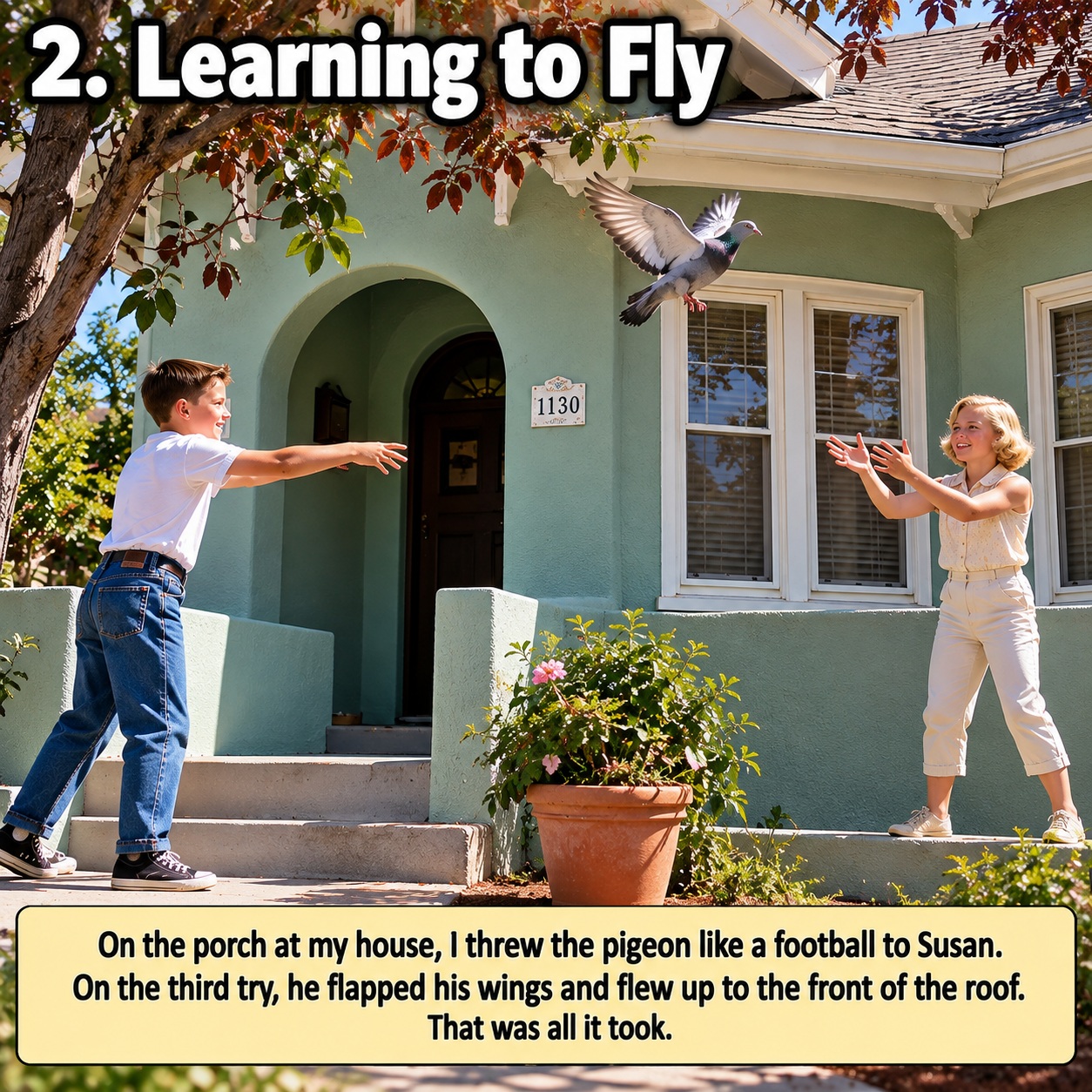
In the summer of 1959, Susan and I discovered something about love and compassion that has remained with me throughout my life. We found a young pigeon who had apparently left his nest before he had fully learned to fly. We took him home, and with a little encouragement and a few attempts, he spread his wings and discovered that he could fly on his own.
We never put him in a cage. We never clipped his wings or prevented him from leaving. He was completely free to go wherever he wished. Yet, of all the places he could have gone, he chose to stay near us.
He greeted me when I left for school and was there when I returned. When Susan and I went swimming in our little backyard pool, he would fly down to join us. Even among twenty or more pigeons feeding together, I could always find our special friend. As I approached, the others would fly away, but he would remain.
Susan and I had given him a little help when he needed it. In return, he gave us something we could never have asked for: his trust, companionship and loyalty. We loved him, and through his actions, he certainly seemed to love us.
One day, our little friend was suddenly gone. For many years, I believed he had simply joined the other pigeons and flown away. It was only decades later that I learned he had died in an accident. Although that knowledge saddened me, it could never diminish the happiness he had brought into our lives.
Looking
back, I realize that this little pigeon taught Susan
and me a lesson about compassion that no classroom
could have taught us. Love does not require ownership,
and loyalty cannot be demanded. Sometimes, when we
offer kindness without expecting anything in return,
we receive a friendship that stays with us for a
lifetime.